Description
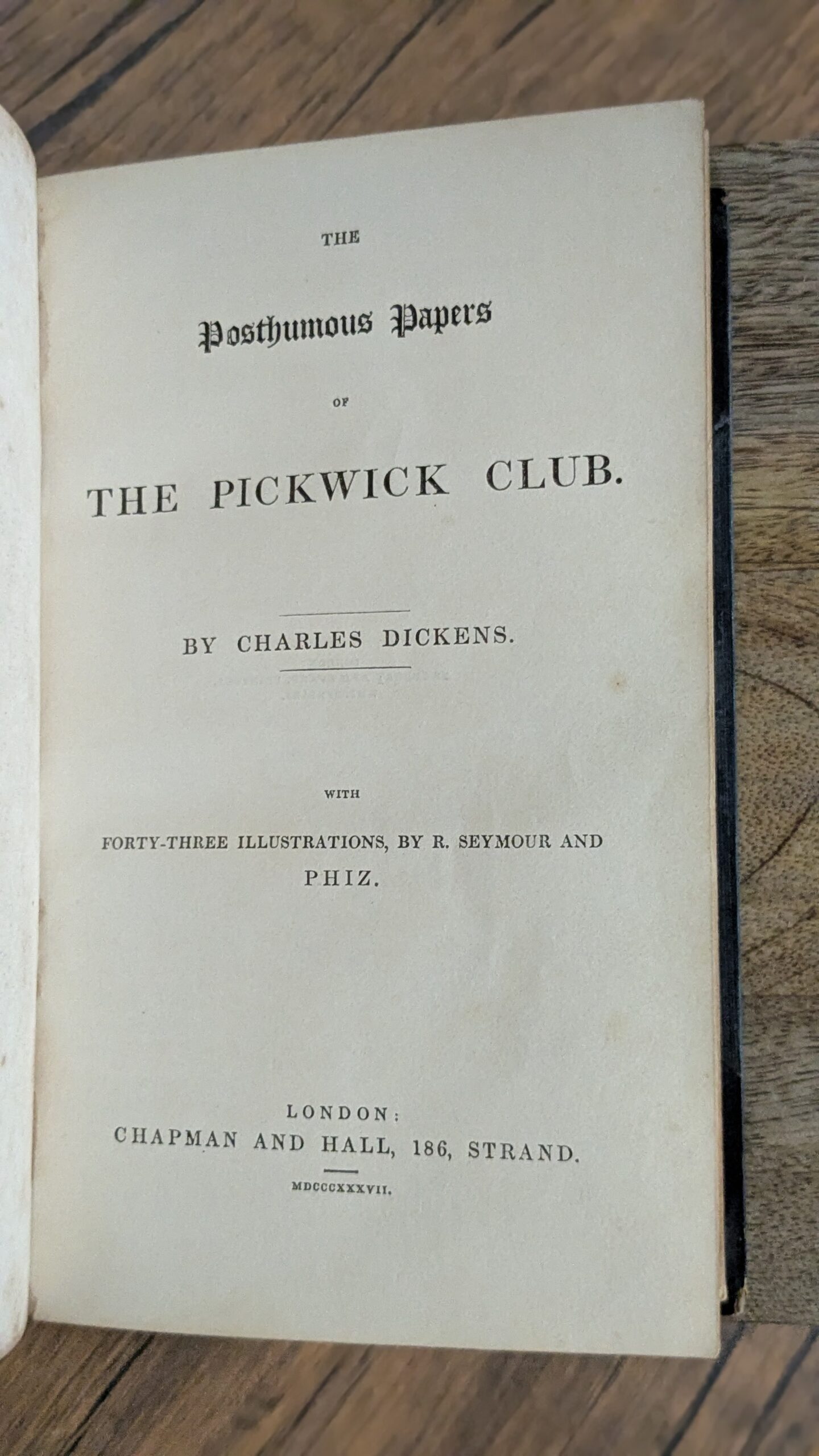
DICKENS, Charles. The Posthumous Papers of The Pickwick Club. London: Chapman and Hall, 1837.
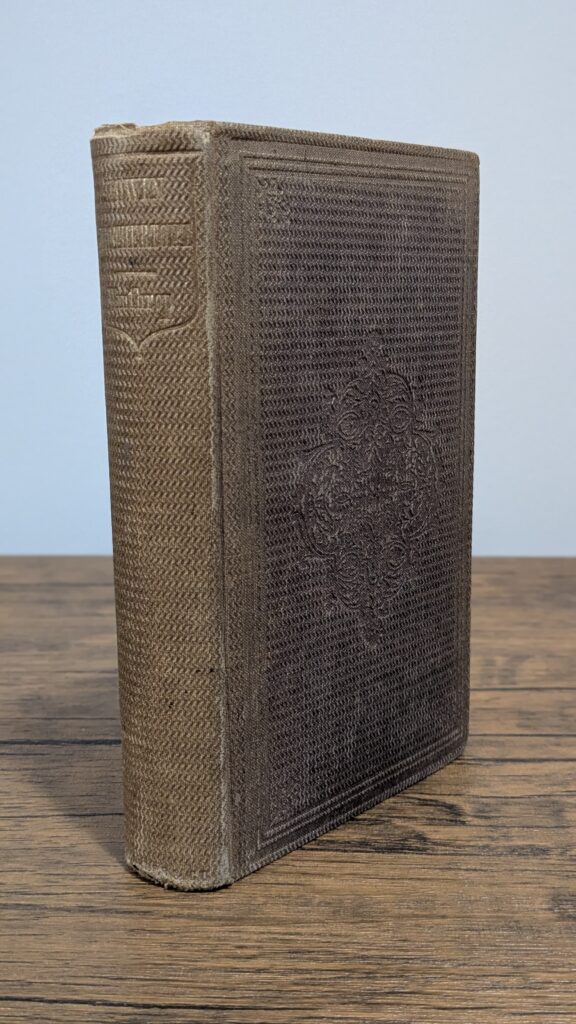
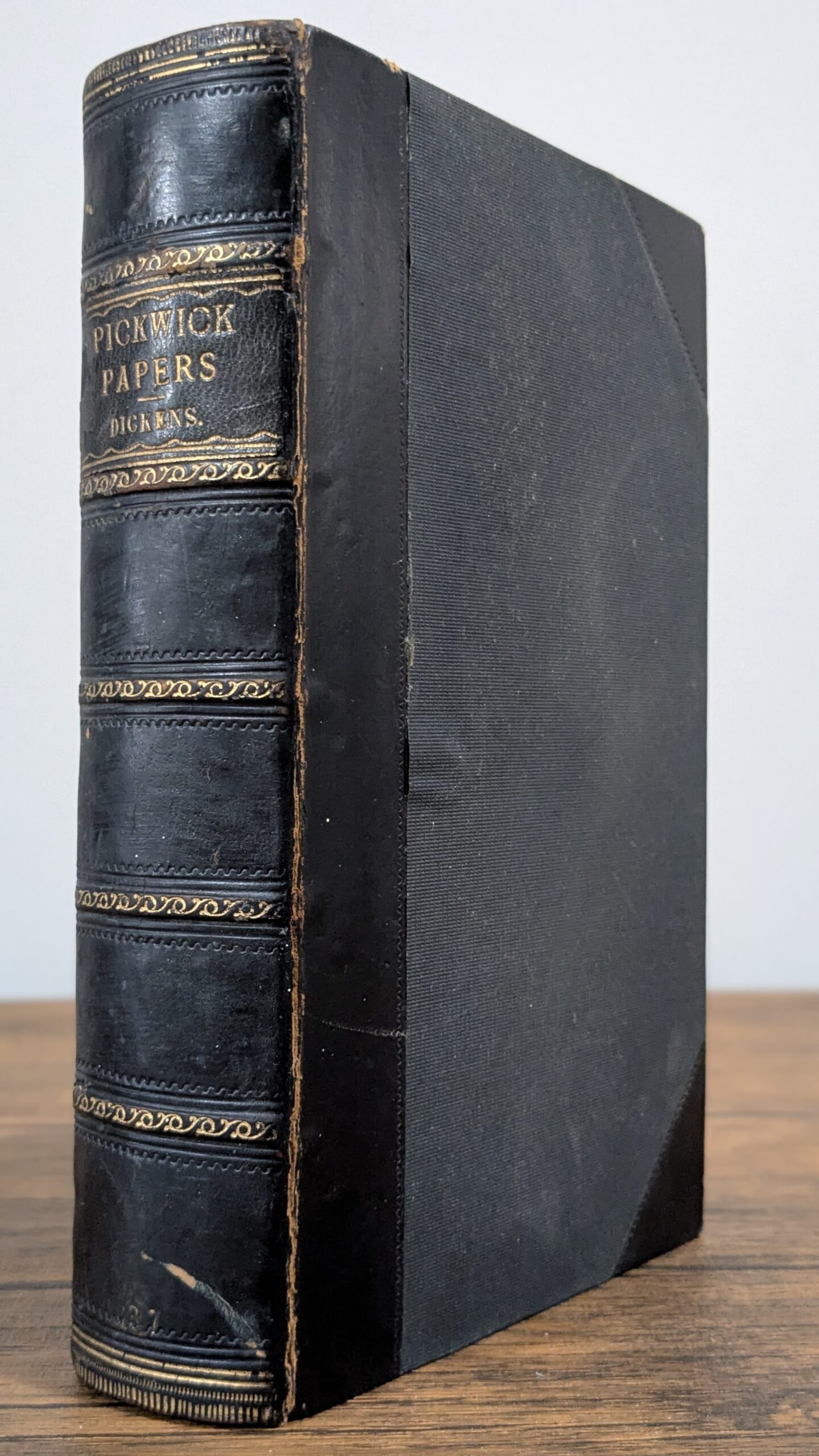
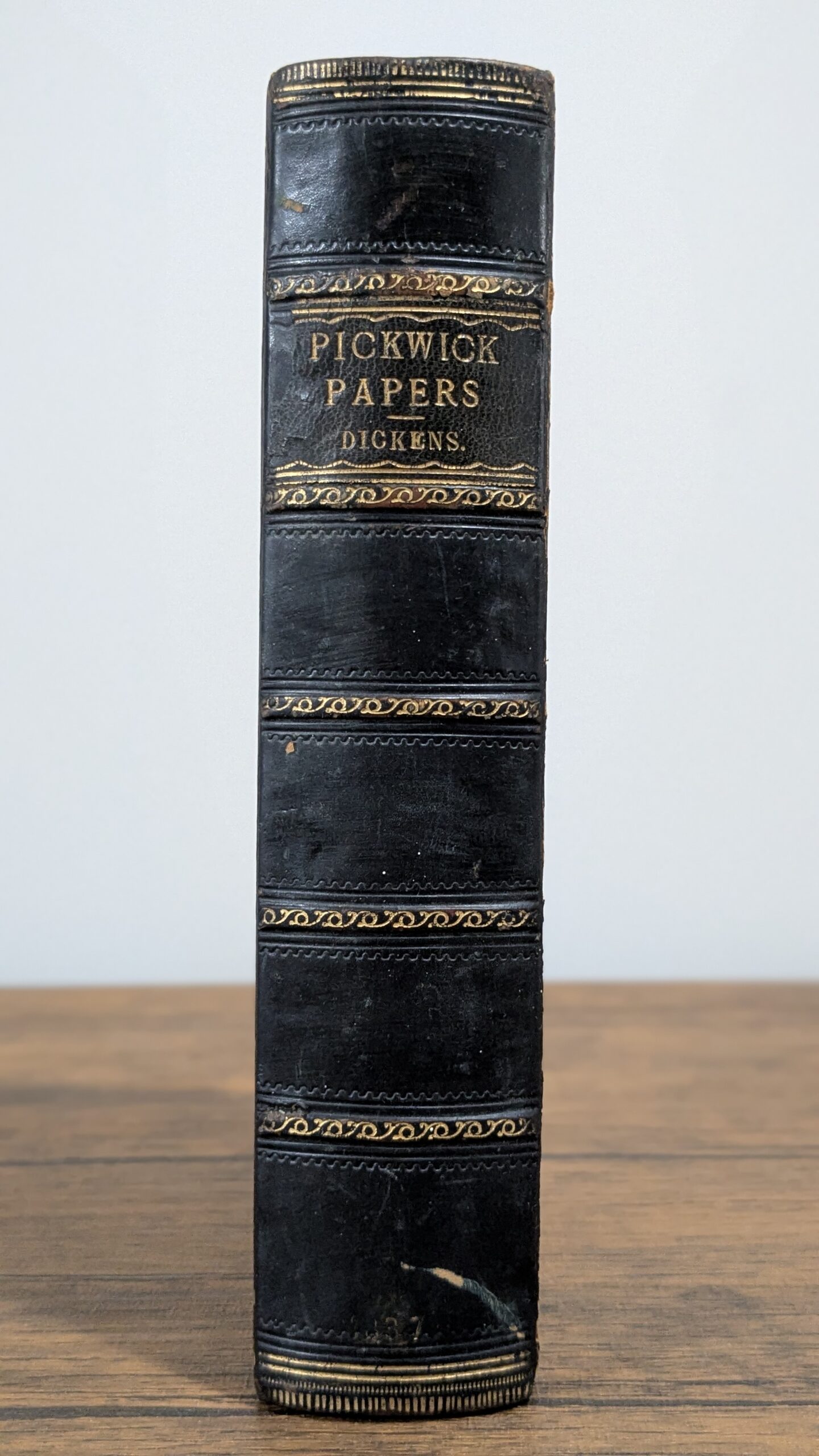
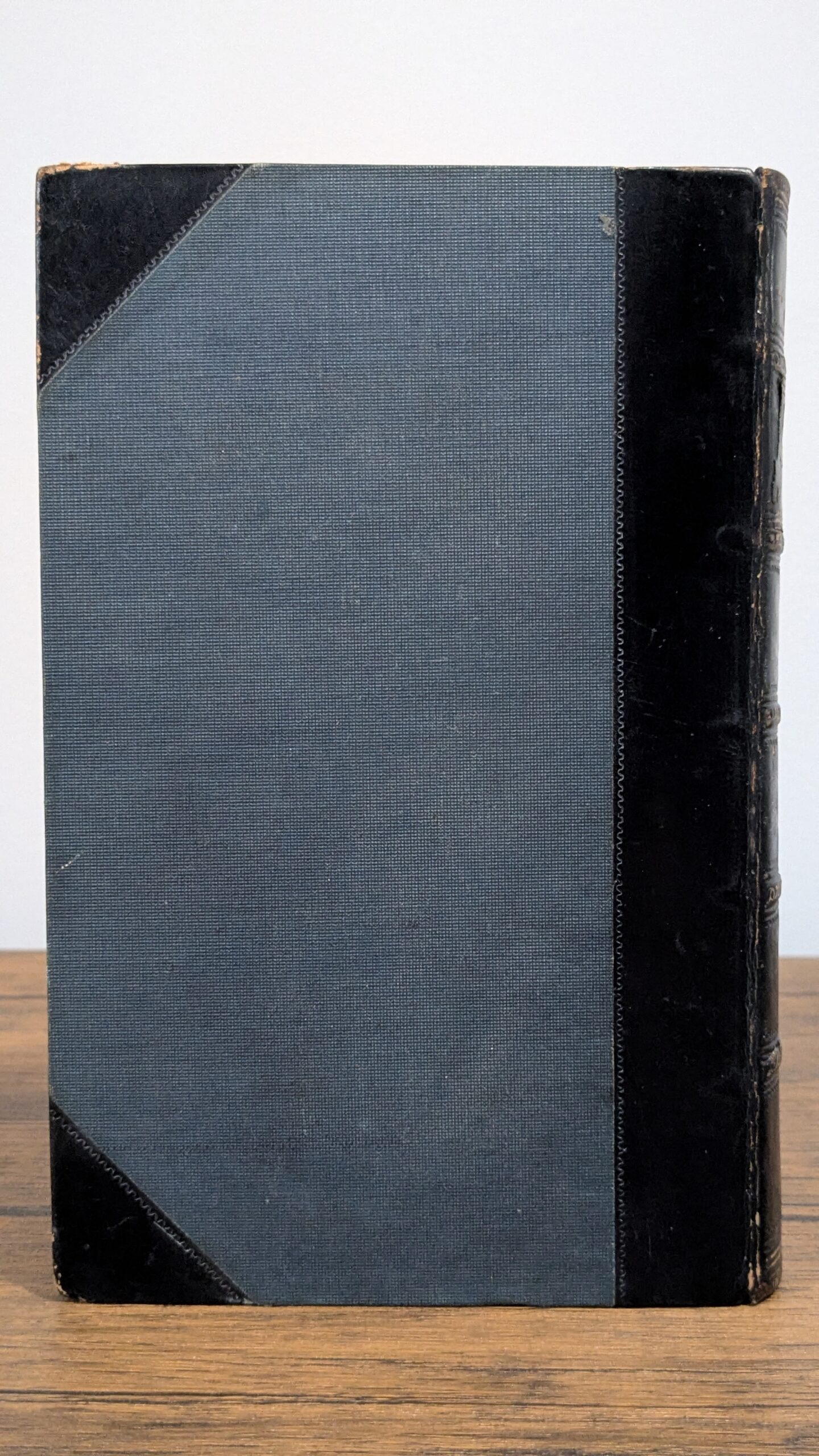
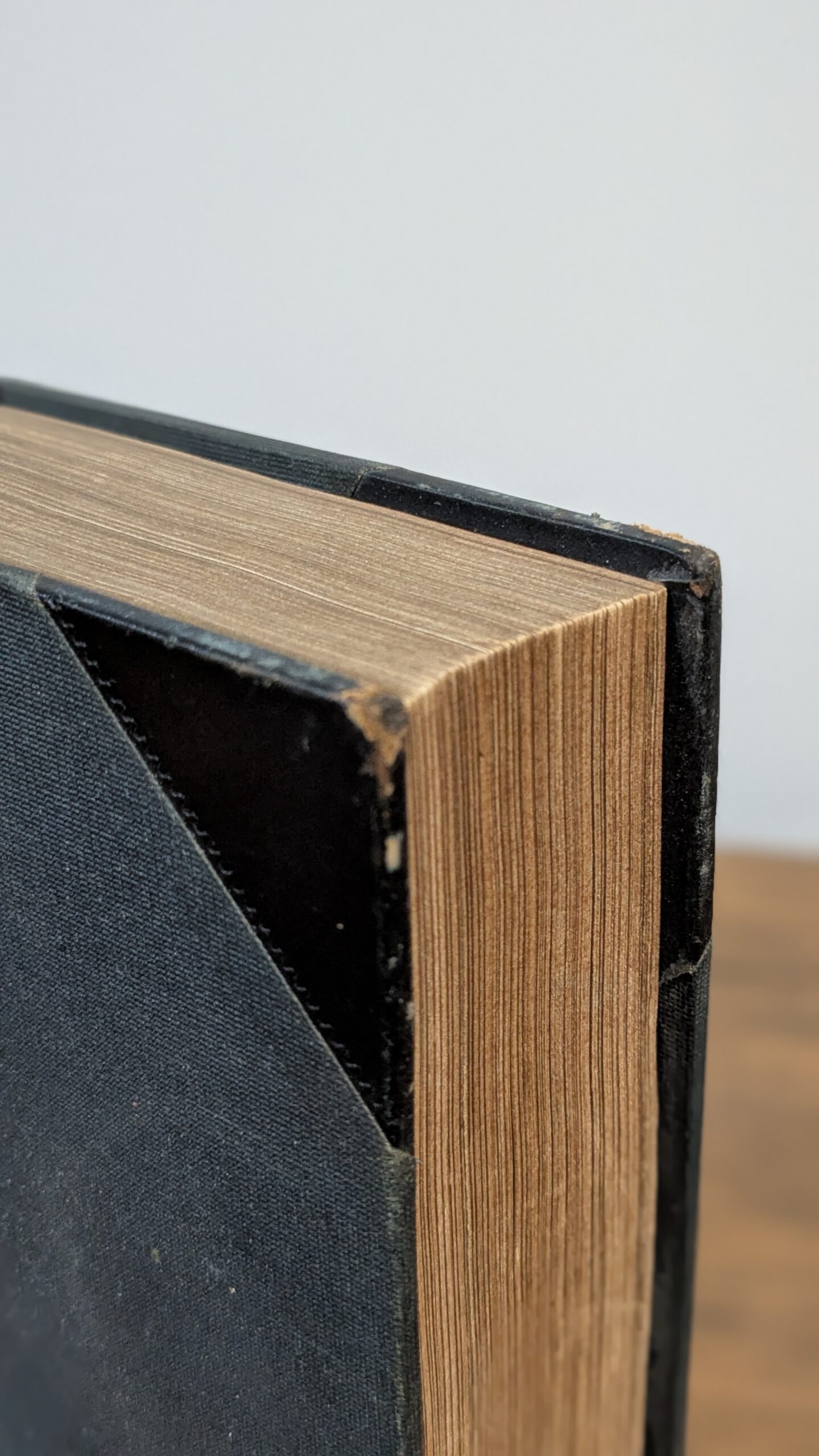
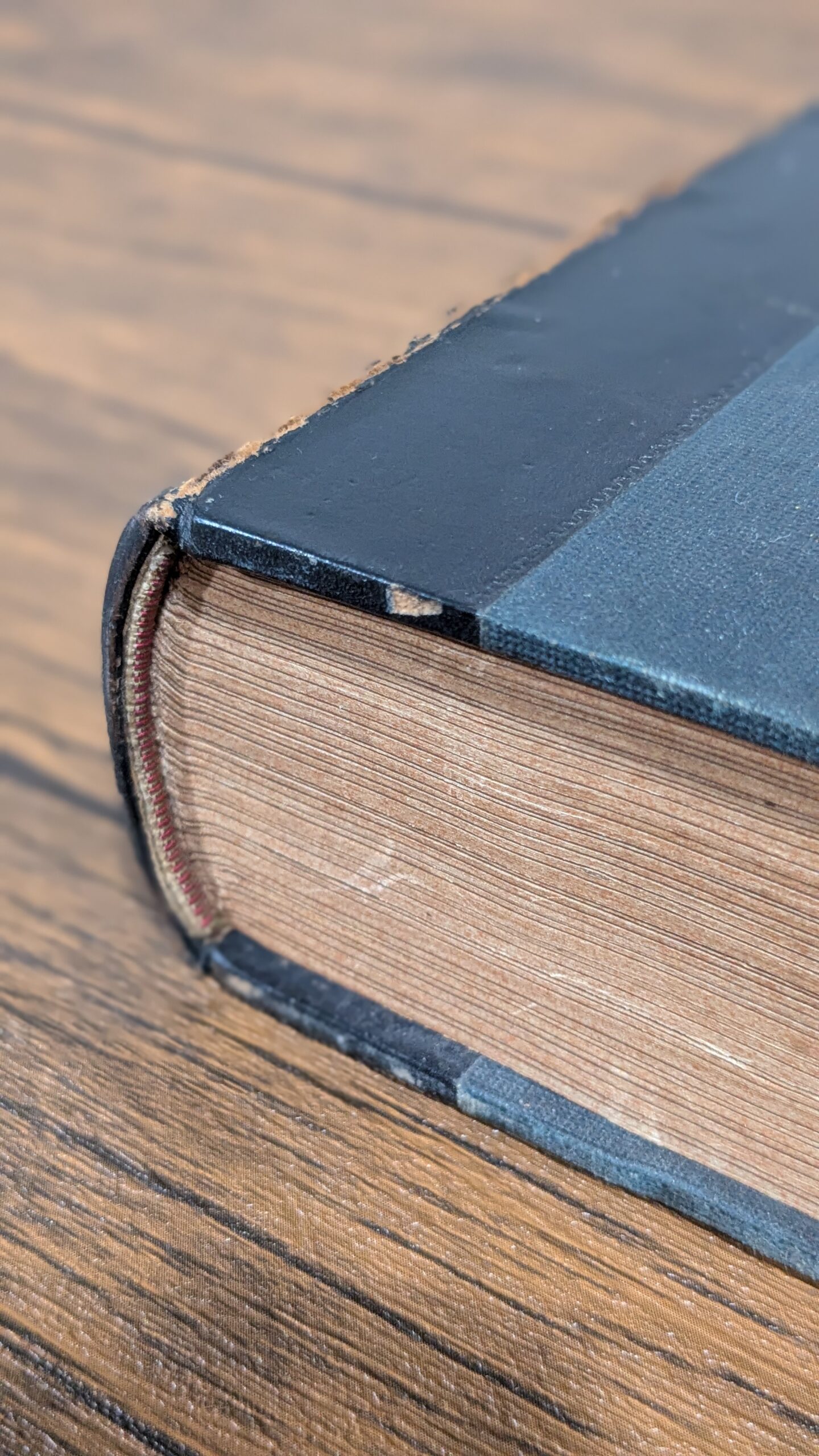
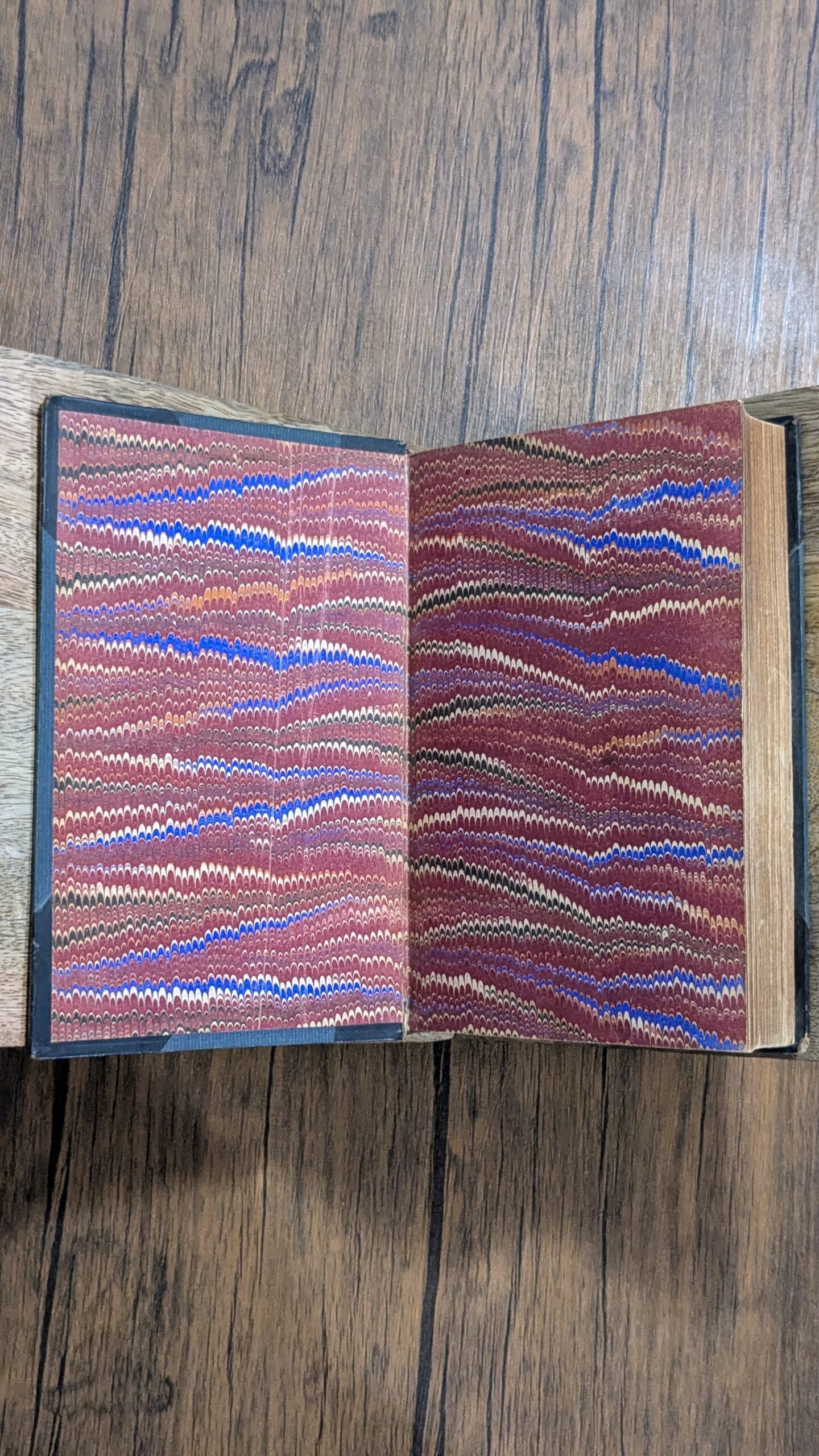
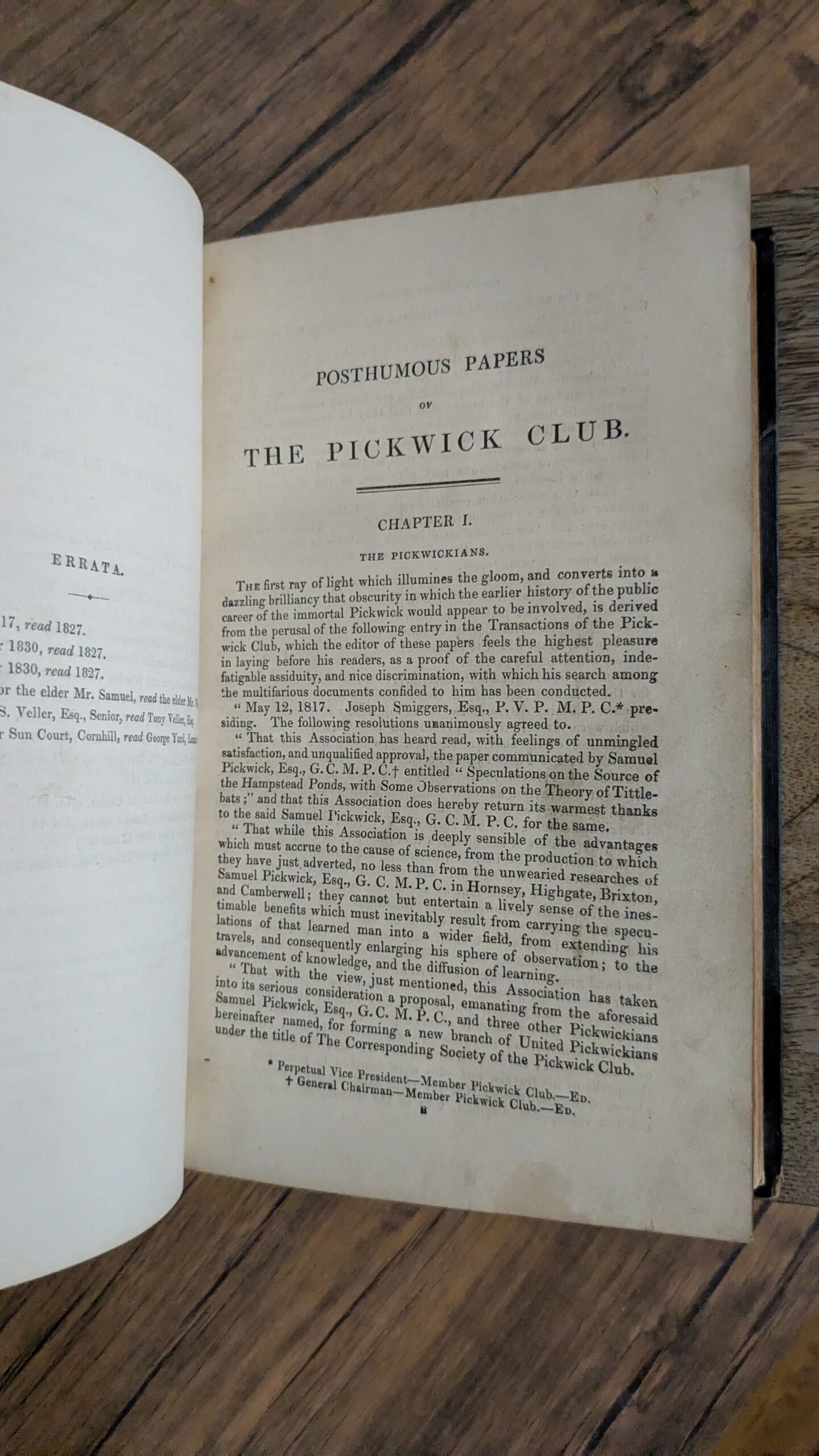
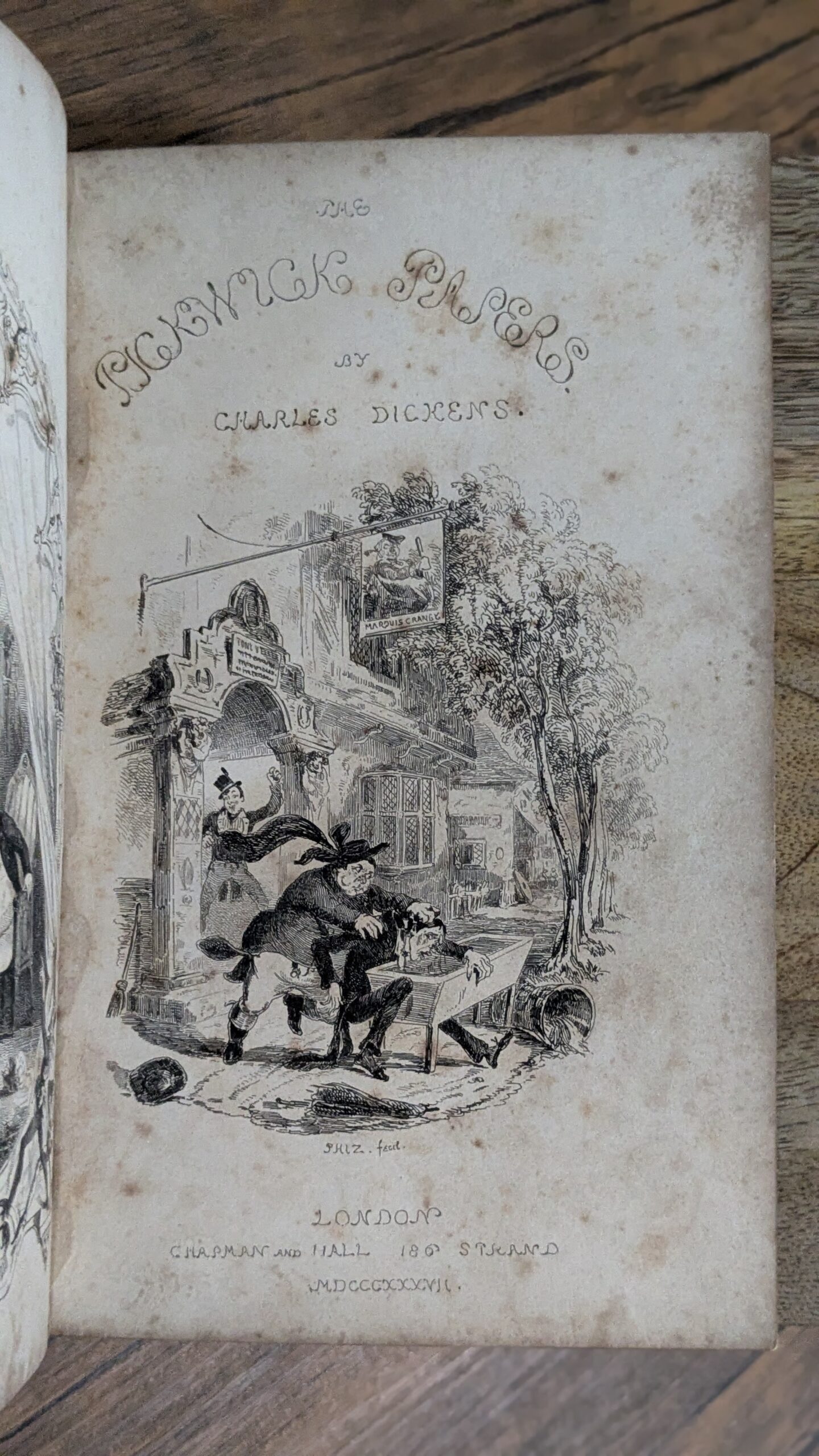
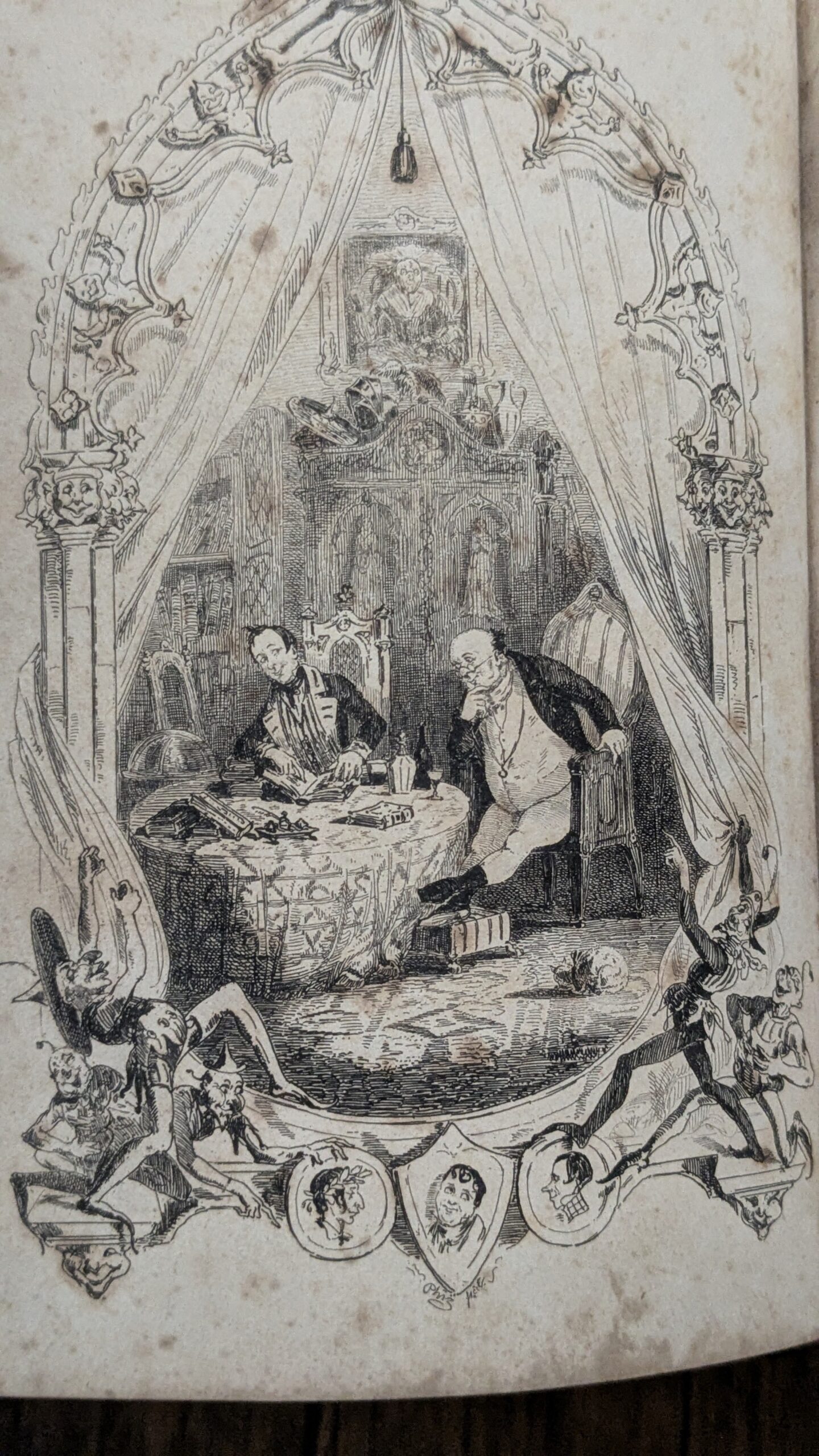
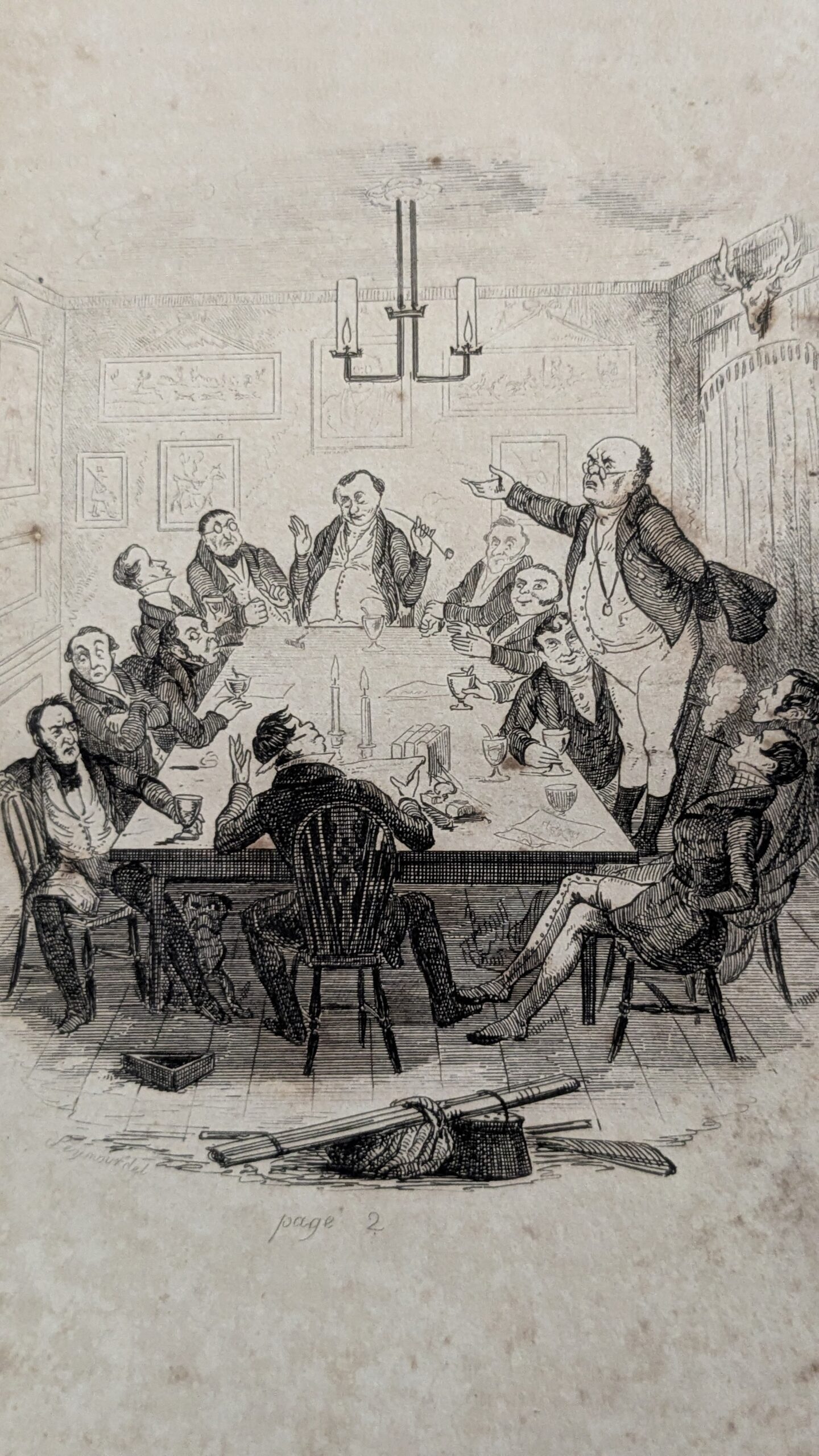
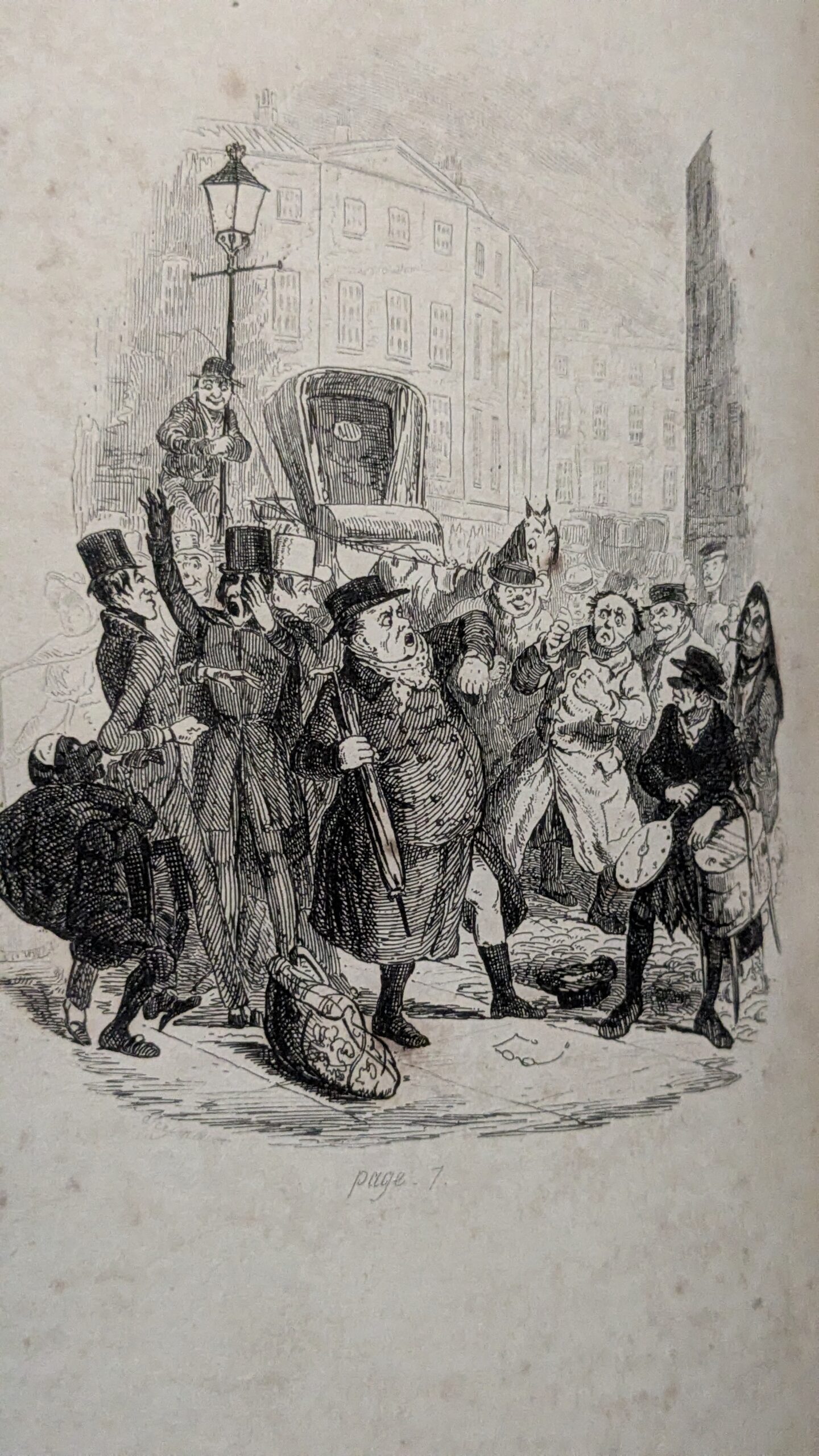
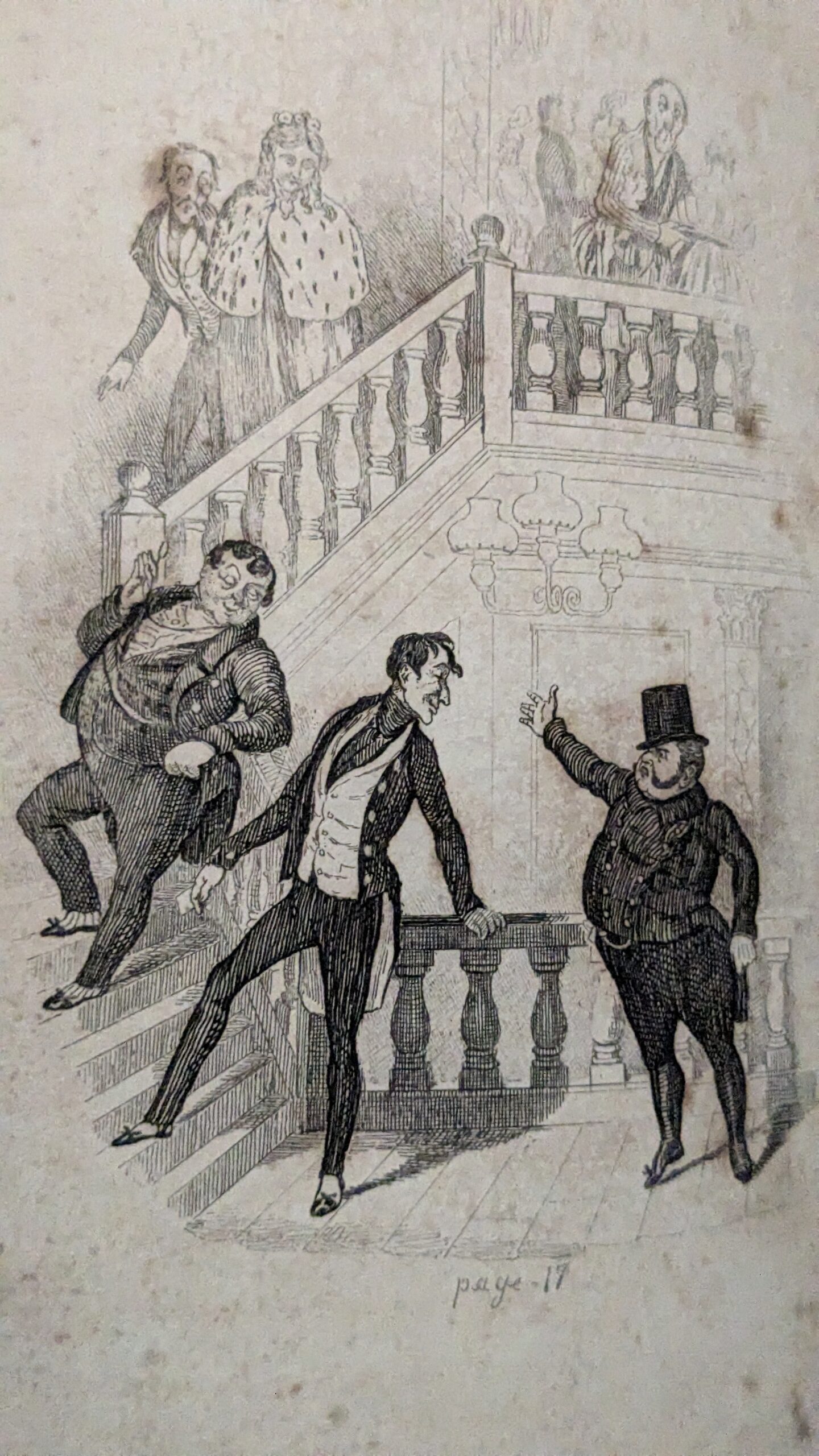
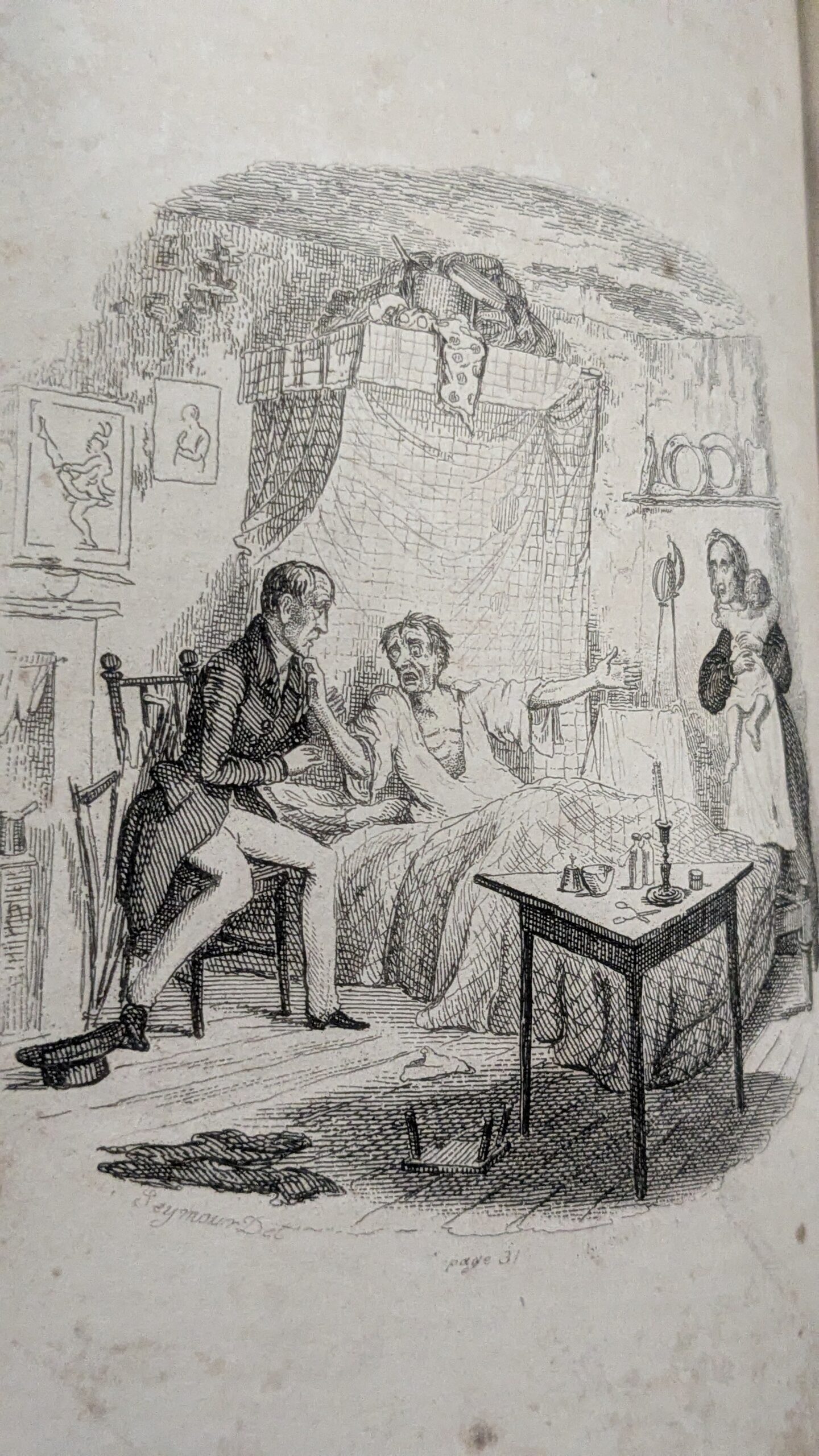
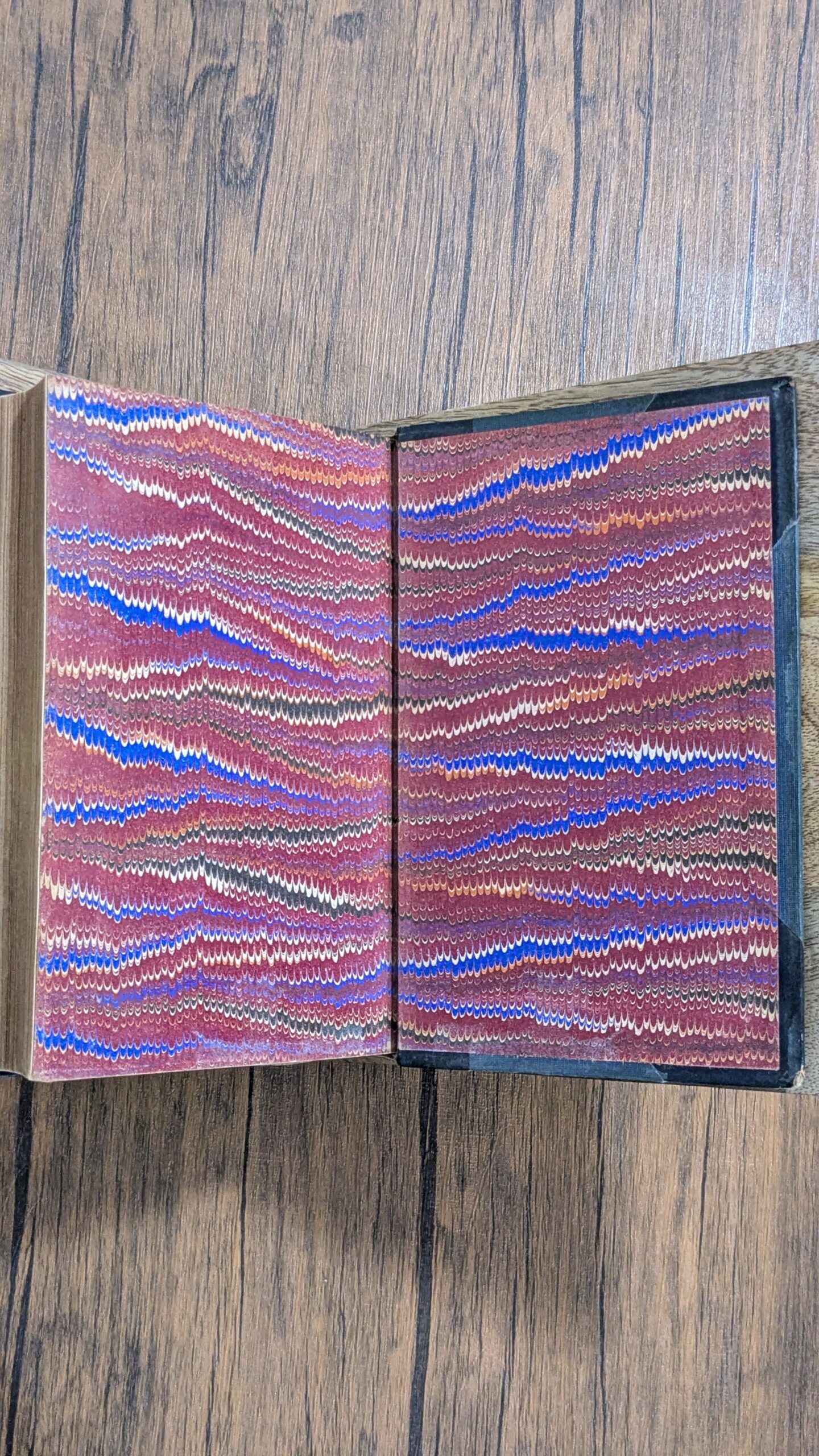
First Edition. Bound from the original monthly parts. 8vo. 22 cm tall. pp. [iii–v], vi, [vii], viii–ix, [x–xi], xii–xiv, [xv–xvi], [1]–609, [610] blank; bound without half-title leaf [i–ii]; frontispiece and vignette title page preceding typographic title page; 41 additional plates by Robert Seymour and Hablot Knight Browne (“Phiz”). Binding unattributed. Half black leather over blue-grey cloth-covered boards, spine with five raised bands forming six compartments ruled and decorated in gilt and blind, black morocco-grain lettering piece to second compartment lettered “PICKWICK / PAPERS” and “DICKENS.” in gilt, date “1837” lettered in gilt at foot, leather corners with blind roll at cloth junctions, marbled endpapers. With monthly numbers 14 through 20 matching the points for the first issue of text and plates, per Hatton & Cleaver, and Miller & Strange. With Hatton & Cleaver’s Variant B of the text of monthly number 12 (two errors on p. 341 and “S. Veller” on p. 342), for which, notably, priority over Variant A has been argued. Hatton & Cleaver, pp. 14-16. With the seven Seymour illustrations: four in the first monthly part from Seymour’s second plates (the first plates having degraded early on), and three in the second monthly part from Seymour’s first plates. With Phiz’s replacement illustrations for the Buss plates in the third monthly part. With the narrative’s final illustration (“Mr. Weller and His Friends Drinking to Mr. Pell”) from Phiz’s “much rarer” Plate A, per Johannsen. With no illustrations carrying the captions and imprints added later for the one-volume book form issuance of this title. See below for the complete plate sequence in this copy, per Johannsen’s designations. Kremers, A Comparative Bibliography of the Sheets and Publishers’ Cloth Cases of the Demy Octavo Works of Charles Dickens, 1837–1872. Hatton & Cleaver, pp. 3-88. Miller & Strange, pp. 1-65. Johannsen, pp. 1-75. Very Good. No previous owner markings or bookplates. Complete with all plates. Six plates (nos. 12, 17, 20, 27, 32, and 33) bound facing wrong page (a common occurrence in this title). Moderate wear to extremities, joints, and spine, with small loss to lettering piece that does not impact lettering. Mild wear to cloth. Moderate foxing to plates. Two small closed tears to preface. Small losses to upper corners of pp. xiii-[xvi] and pp. 331-334. Narrow paper reinforcement strips to outer margins of two plates (nos. 38 and 40), p. 578, and p. 579. Small paper reinforcement piece to p. 28. Trace pencil markings in text, usually corresponding with bibliographic points.
- “It is quite probable that only Shakespeare’s Works, the Bible and perhaps the English Prayer Book, exceed ‘Pickwick Papers’ in circulation.” Eckel, The First Editions of the Writings of Charles Dickens, p. 17.
- Charles Dickens’s first novel (published serially in 20 monthly numbers from April 1836 to November 1837), the first title to carry Dickens’s real name, and Dickens’s first collaboration with “Phiz,” who eventually became Dickens’s chief illustrator (only the pseudonymous short story/sketch collection, Sketches by Boz, illustrated by George Cruikshank, precedes).
- First editions of Pickwick Papers exhibit the rich history of the launch of arguably the most famous career in 19th-century fiction; Dickens agreed to Chapman and Hall’s proposal (already passed by several other authors) to compose accompanying text for a series of illustrated cockney sporting scenes drawn by the popular illustrator Robert Seymour. Patten, Charles Dickens and His Publishers, pp. 62-63.
- After Seymour’s tragic suicide, which was preceded by Dickens’s creative disagreements, Robert William Buss was hired to continue the Pickwick illustrations; however, Dickens found Buss’s first two illustrations unsuitable and Buss was dismissed. Johannsen, pp. 11-12; Kremers, pp. 68-69.
- The little-known artist Hablot Knight Browne (“Phiz”) was hired as the third and final Pickwick illustrator, who went on to create 1,603 illustrations for Dickens’s body of work (compared to Cruikshank’s 64 illustrations for the same). Johannsen, p. vi.
- After monthly part 14 (present here in first issue, as are all succeeding monthly parts), the publication of Pickwick lapsed for the month of June 1837—the same month Queen Victoria’s reign began—due to the sudden death of Dickens’s sister-in-law, Mary Hogarth, creating accumulated demand from the public for Pickwick (Dickens married Mary’s sister, Catherine, the same month Pickwick‘s first monthly part was published, and Mary became an inspiration for characters in David Copperfield, Oliver Twist, Nicholas Nickleby, and The Old Curiosity Shop). Miller & Strange, p. 56.
- “If I were to live a hundred years, and write three novels in each, I should never be so proud of any of them, as I am of Pickwick, feeling as I do, that it has made its own way . . .” Dickens to Chapman and Hall, 1 Nov. 1836; quoted by Patten, p. 45.
Additional information — The plate sequence in this copy, per Johannsen’s designations, is as follows: Part 1: B, B, B, B; Part 2: A, A, A; Part 3: B, A (9*); Part 4: A3, A2; Part 5: A2, A2; Part 6: A, A; Part 7: A, A2; Part 8: A, A; Part 9: A, A; Part 10: A, A; Part 11: A, A; Part 12: B1, B1; Part 13: B1, B1; Part 14: A, A; Part 15: A, A; Part 16: A, B1; Part 17: A, B1; Part 18: B1, B1; Part 19/20: A, A, A, A.