Description
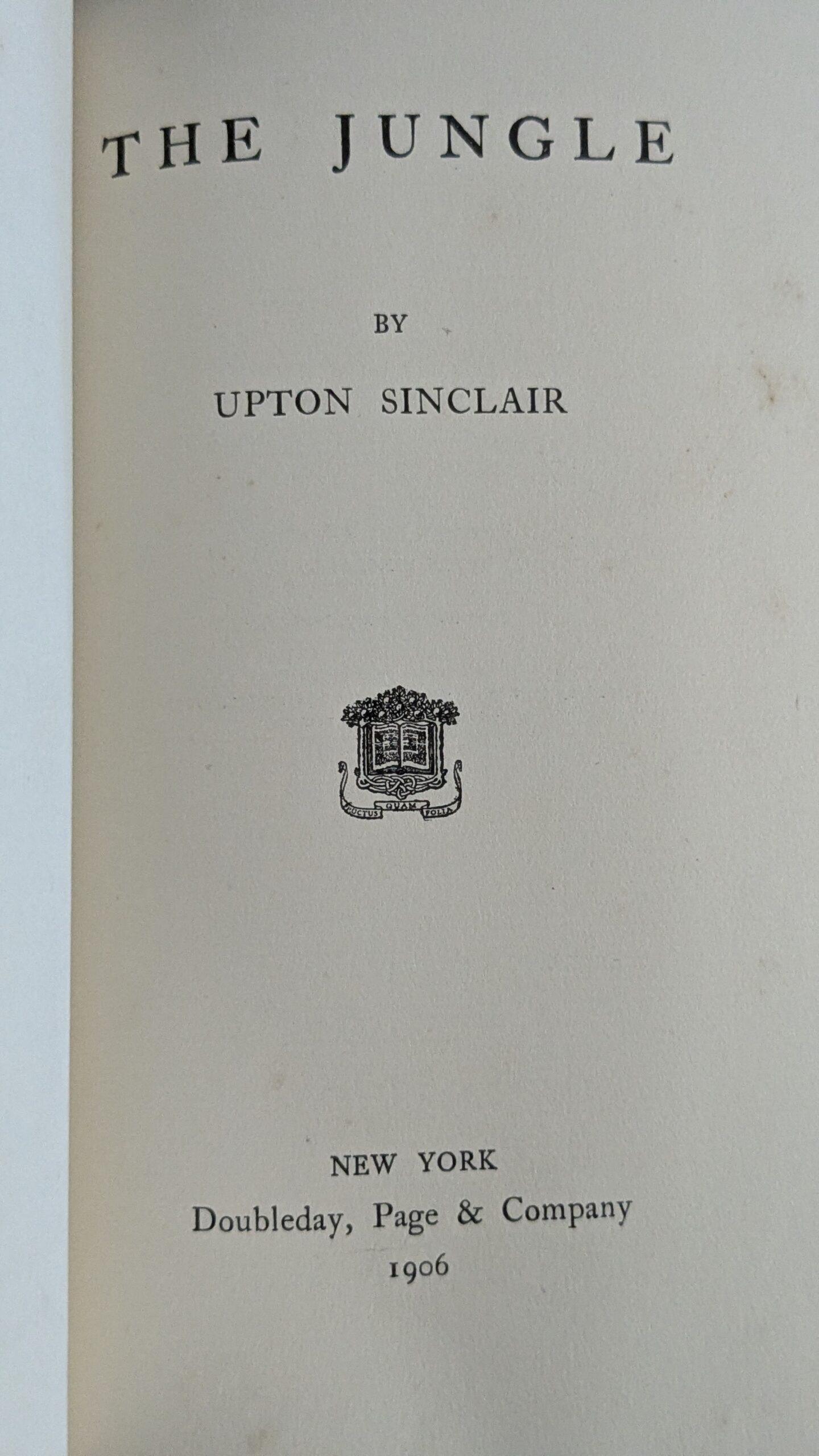
SINCLAIR, Upton. The Jungle. New York: Doubleday, Page & Company, 1906.
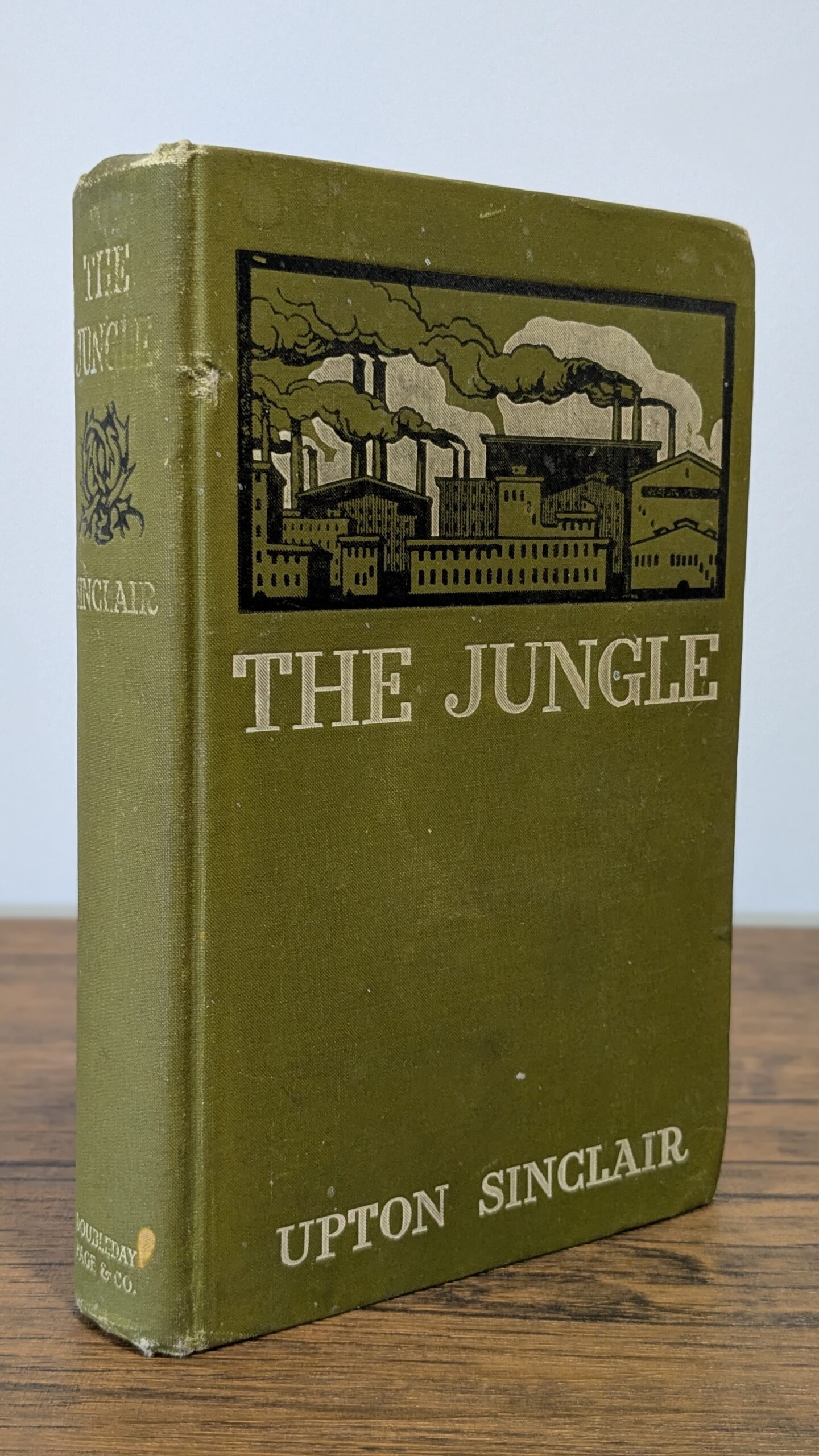
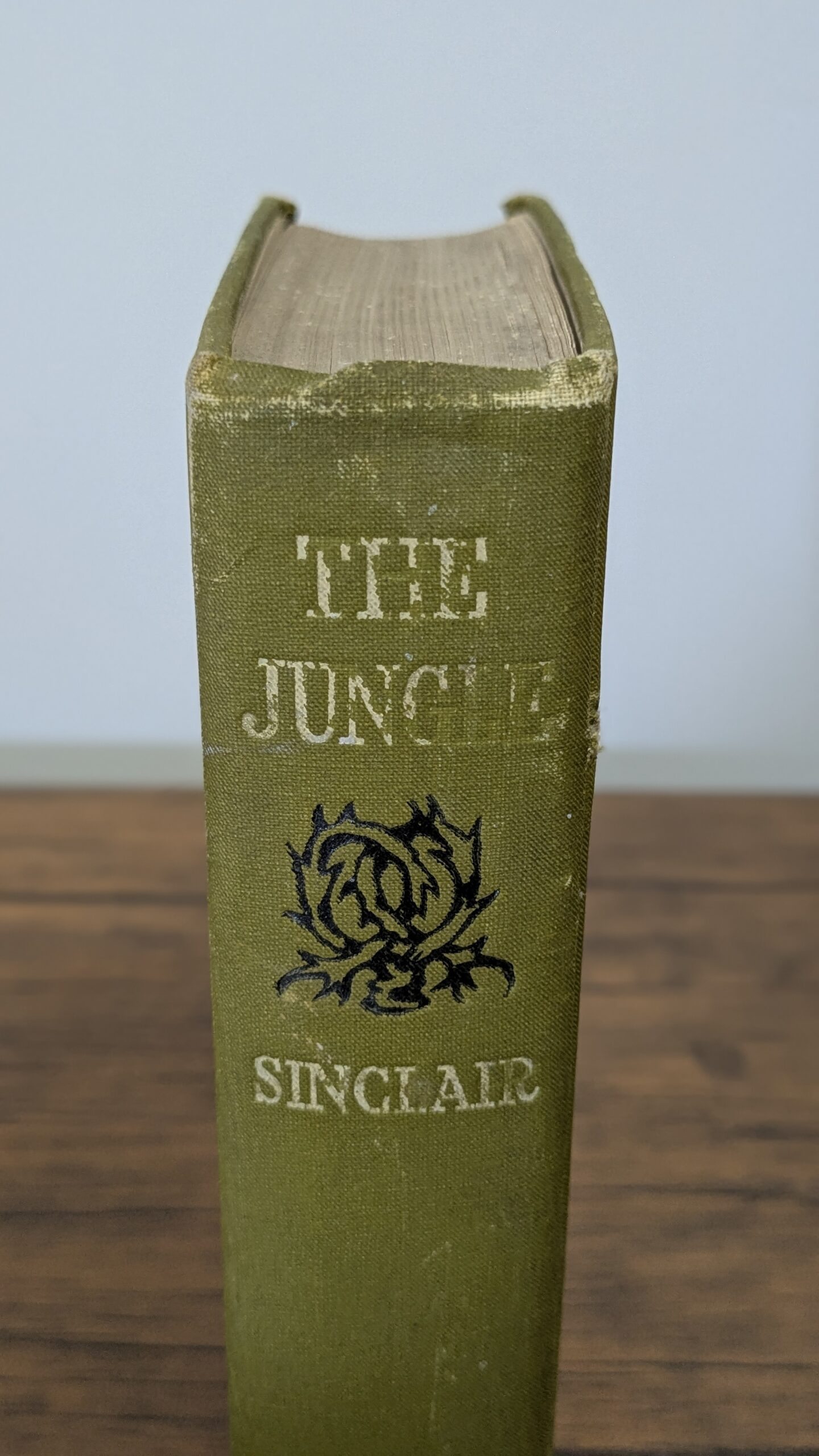
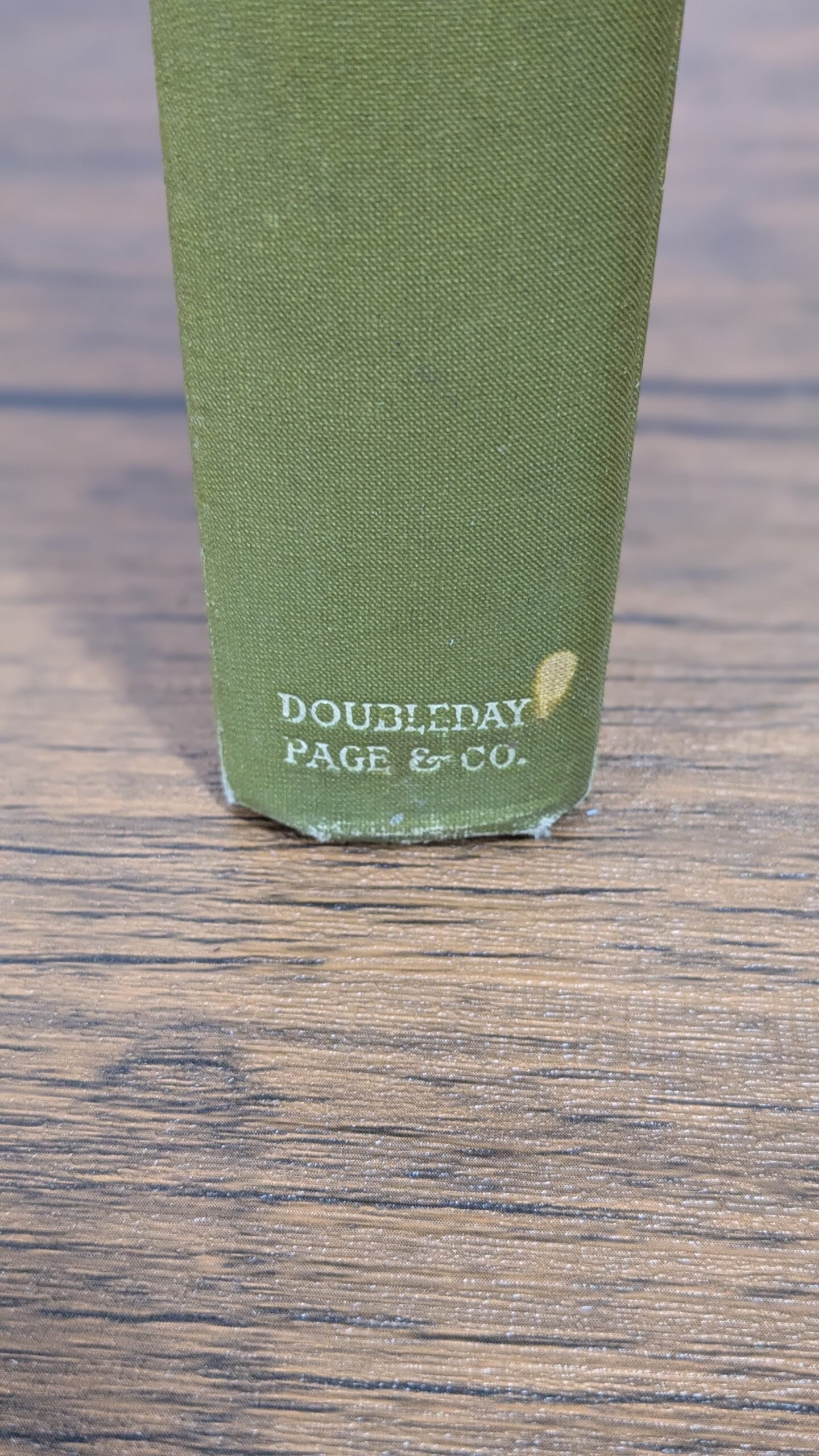
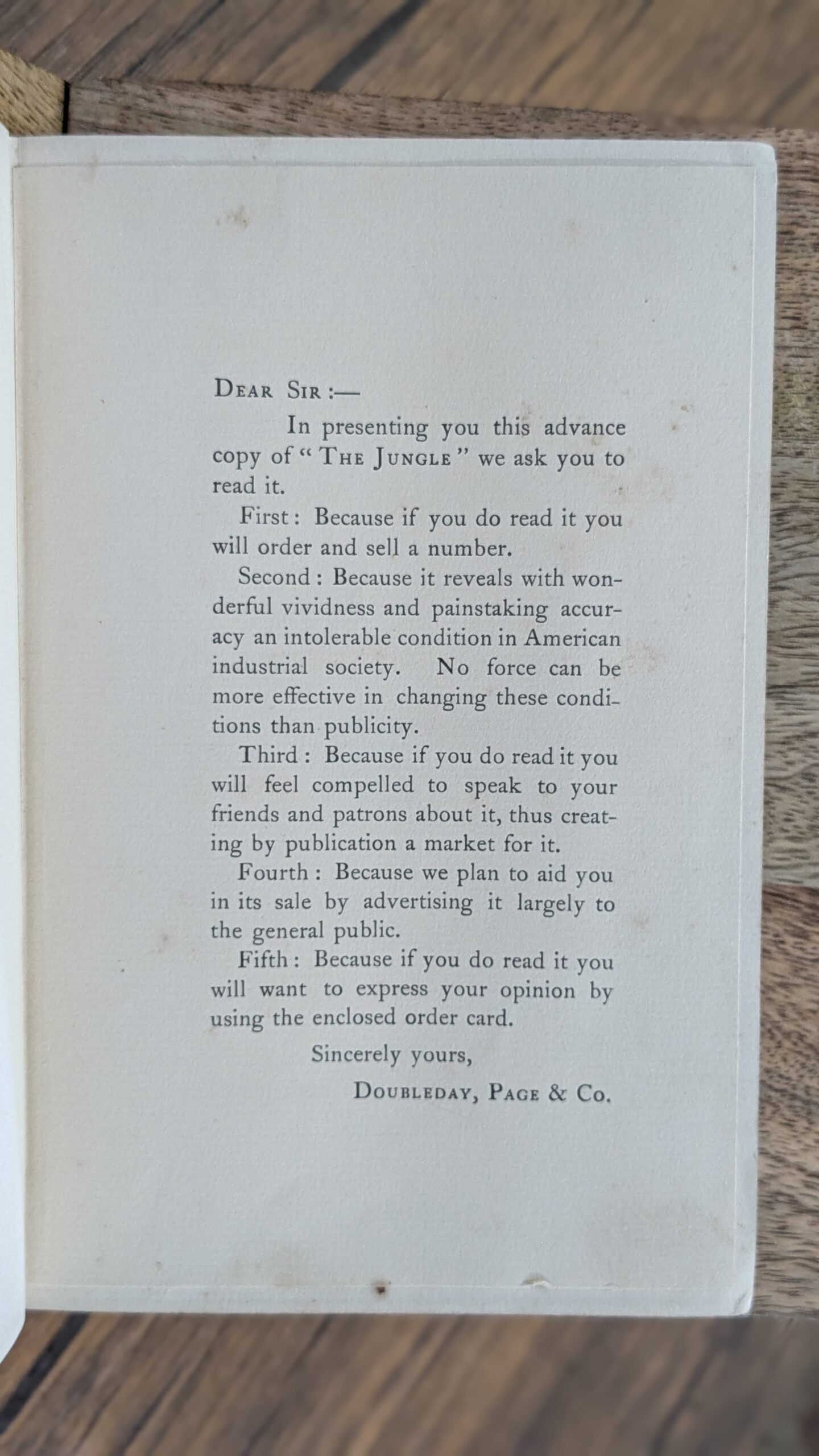
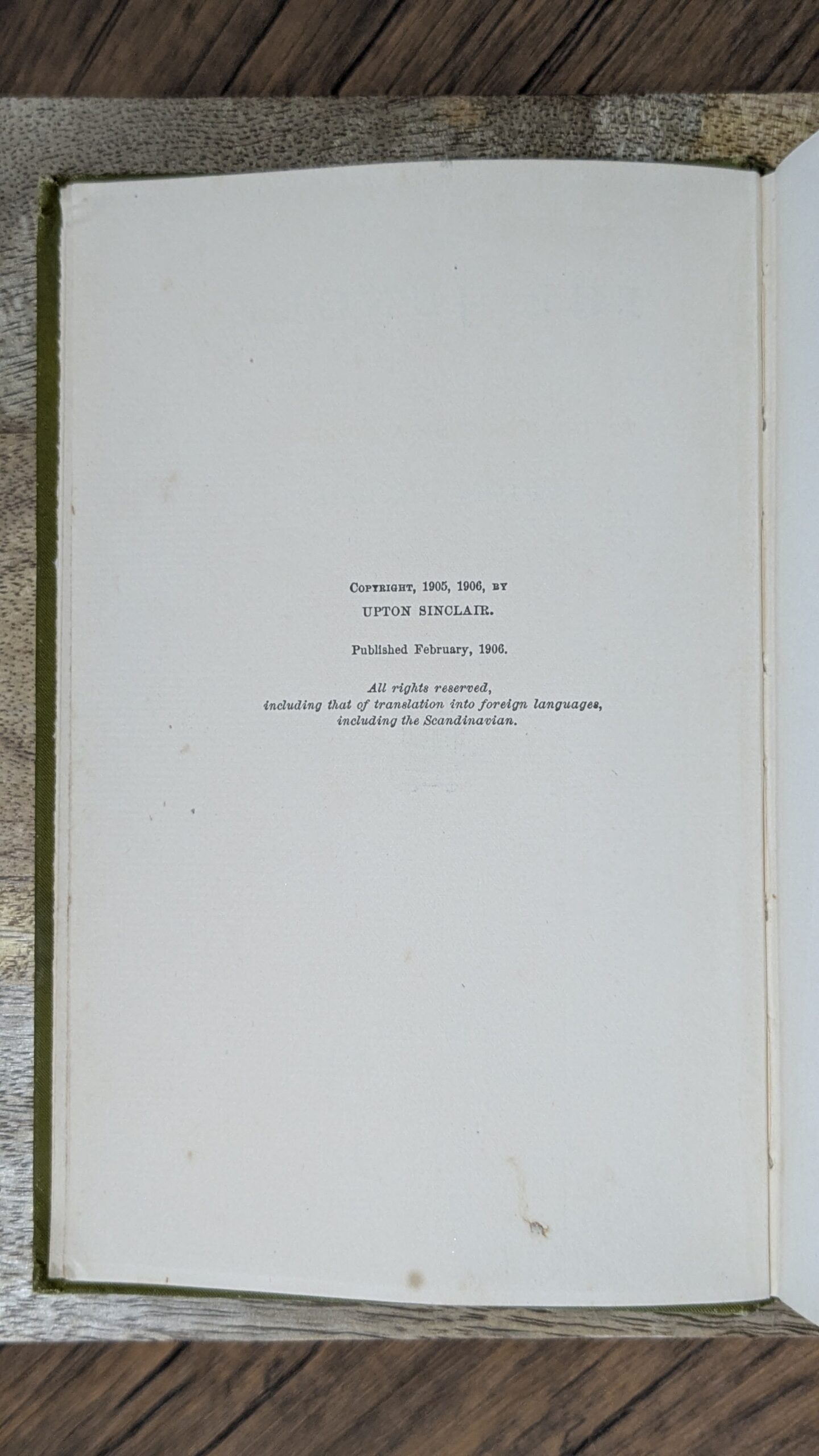
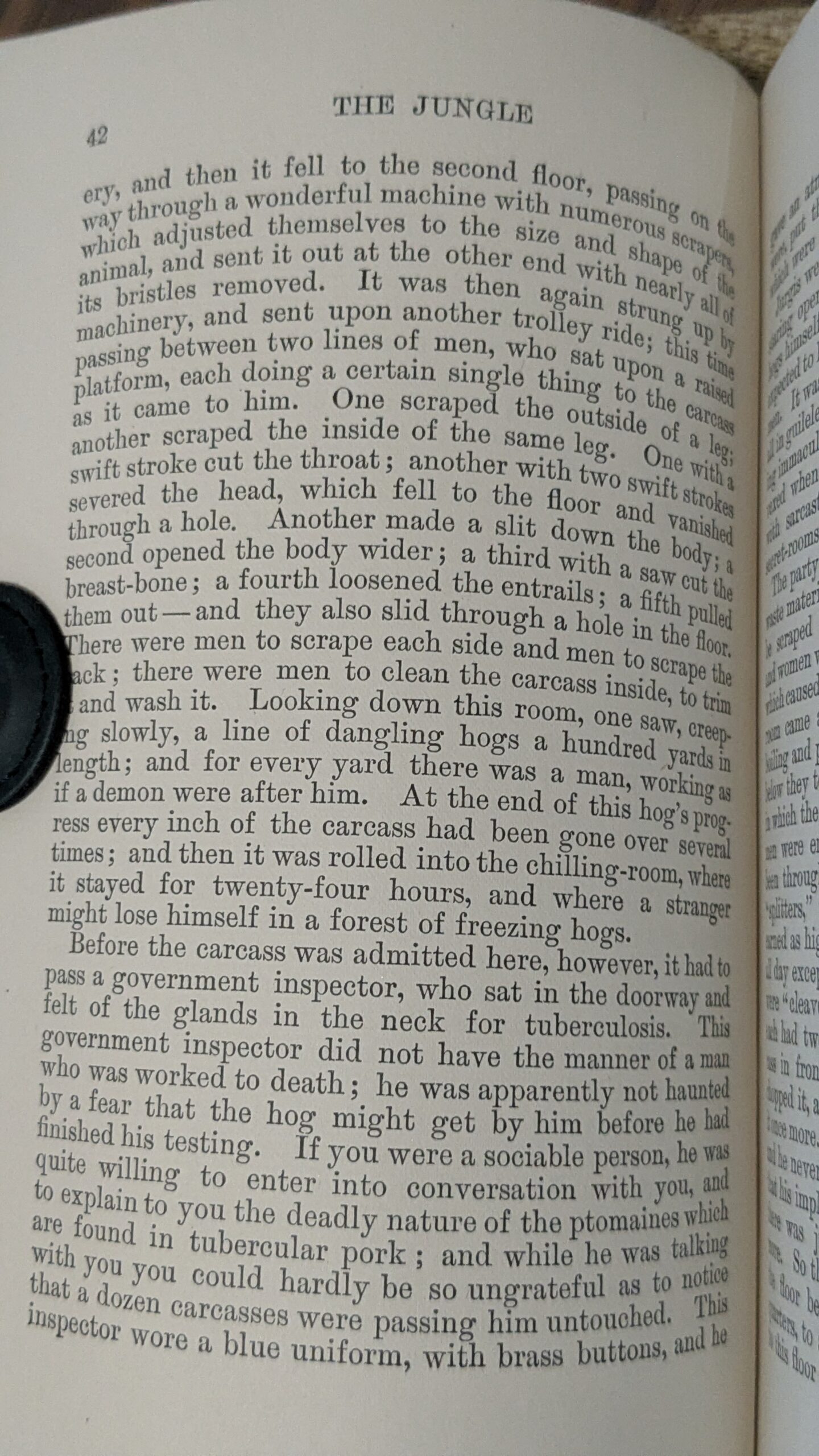
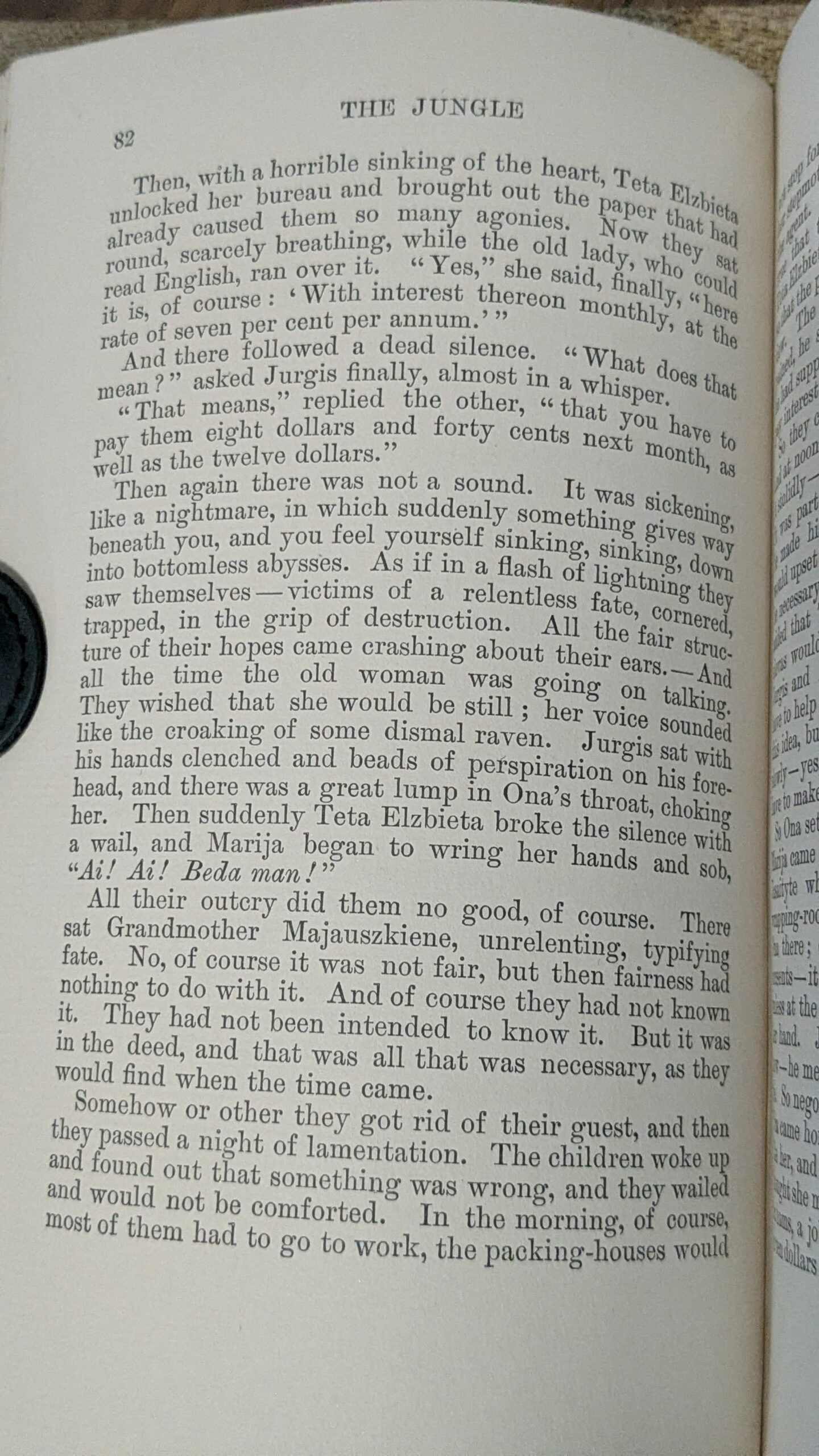
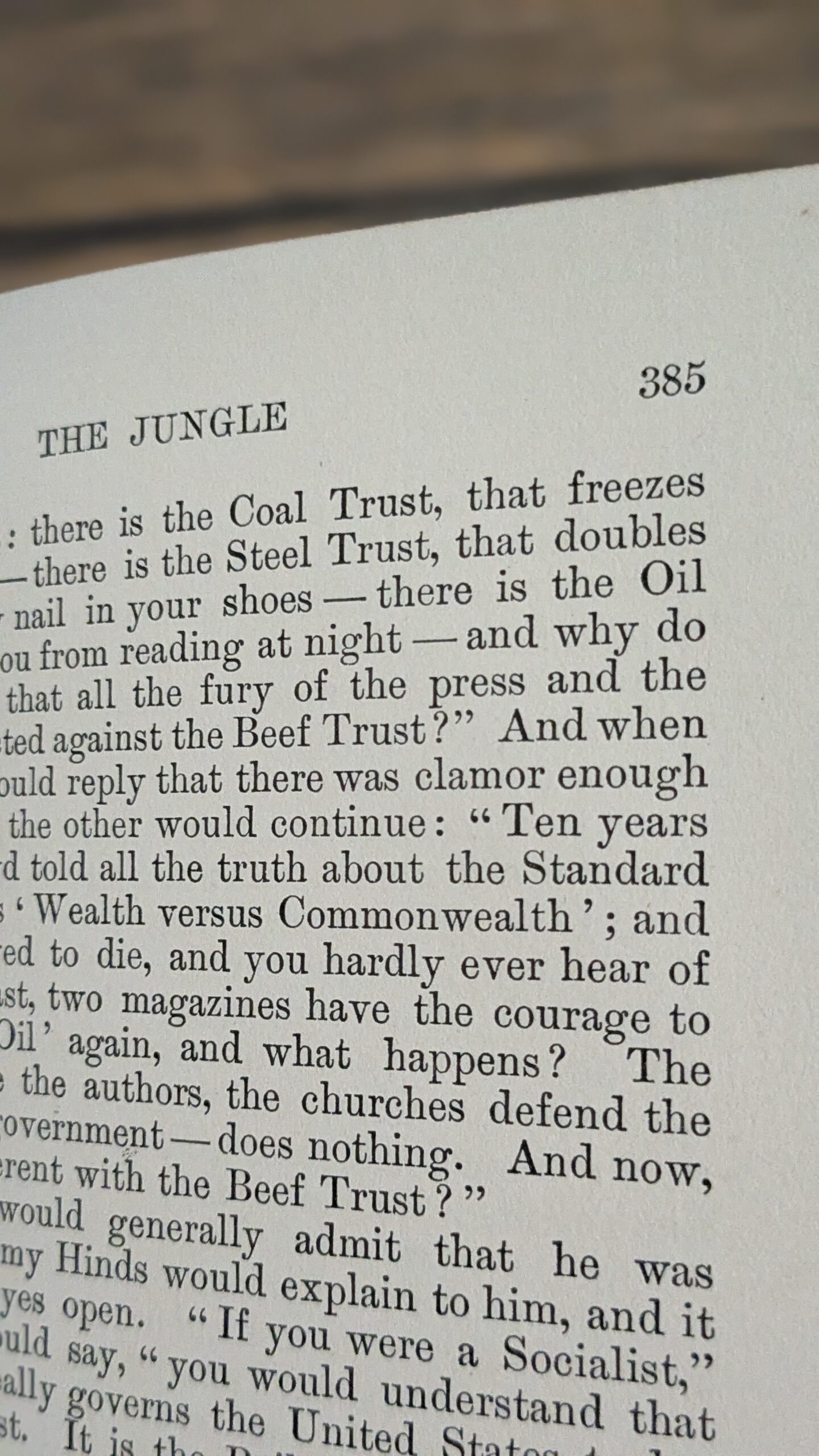
Advance Copy. 8vo. 20 cm tall. pp. [i-xii], 1-413, [414] blank; [4] blanks. Publisher’s full olive green decorated cloth, front board and spine stamped in black and white. Type at foot of spine using open ampersand (later copies have type using closed ampersand, per Ahouse). Tipped-in publisher’s advance-copy leaf preceding title page. Copyright page states “Published February, 1906.” Unbroken “1” in “1906” on copyright page. Page 42 with “a blue uniform, with brass buttons”. Page 82 with “eight dollars and forty cents”. Page 385 with “3” in page number in proper font. Without publisher’s advertisements found in the trade edition. Ahouse A7. Very Good-. No previous owner markings or bookplates. Rectangular shadow to front endpapers, conceivably from the publisher’s order card that accompanied the advance copies (as mentioned on the advance-copy leaf). Moderate wear and staining to boards and extremities, with small abrasion to front board near joint. Moderate wear and foxing to text block. Pronounced crease to leaf containing pp. 35–36. Lacking the scarce publisher’s order card.
- An advance copy of Upton Sinclair’s breakout novel and seminal work, which Jack London called the “Uncle Tom’s Cabin of wage slavery,” adding: “What Uncle Tom’s Cabin did for black slaves, The Jungle has a large chance to do for the wage-slaves of today.” See London, Letter to the Appeal to Reason, Appeal to Reason, Nov. 18, 1905.
- After reading his own advance copy of this title, President Theodore Roosevelt began an extensive correspondence with Sinclair over meatpacking industry reform and by June 1906 had signed the Federal Meat Inspection Act and the Pure Food and Drug Act, the latter effectively creating the Food and Drug Administration. See Crotty, “Bring your big stick to The Jungle,” Pieces of History (U.S. National Archives), Sept. 20, 2010.
- The results of Hinman collator examintions in 1982 at the University of Houston led Ahouse to conclude that reliable demonstration of precedence among first edition copies of The Jungle is unworkable—a bane to fiction collectors and catalogers alike.
- However, this rare advance copy, which matches the first edition “points” (such as they are), does offer collectors a form of demonstrable precedence, as Ahouse noted that the advance copies from Doubleday, Page were in reviewers’ hands as much as a month before the official publication date (indeed, it is this fact that caused Ahouse to contemplate assigning effective priority to the first trade edition over a subscribers’ edition that Sinclair had personally arranged to appear simultaneously).
- One of the more bibliographically compelling advance-copy collectibles in pre-war modern literary fiction.