Description
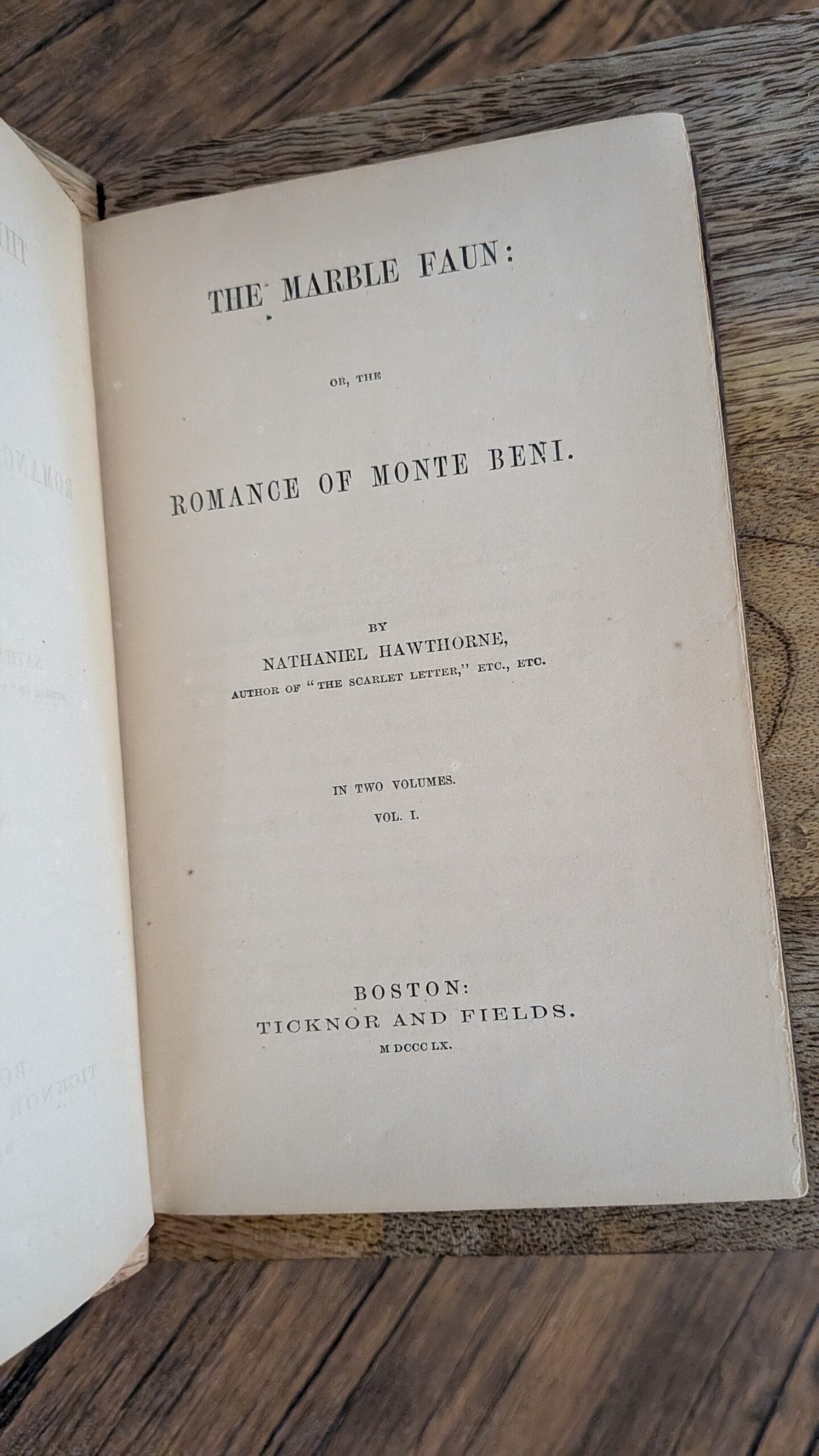
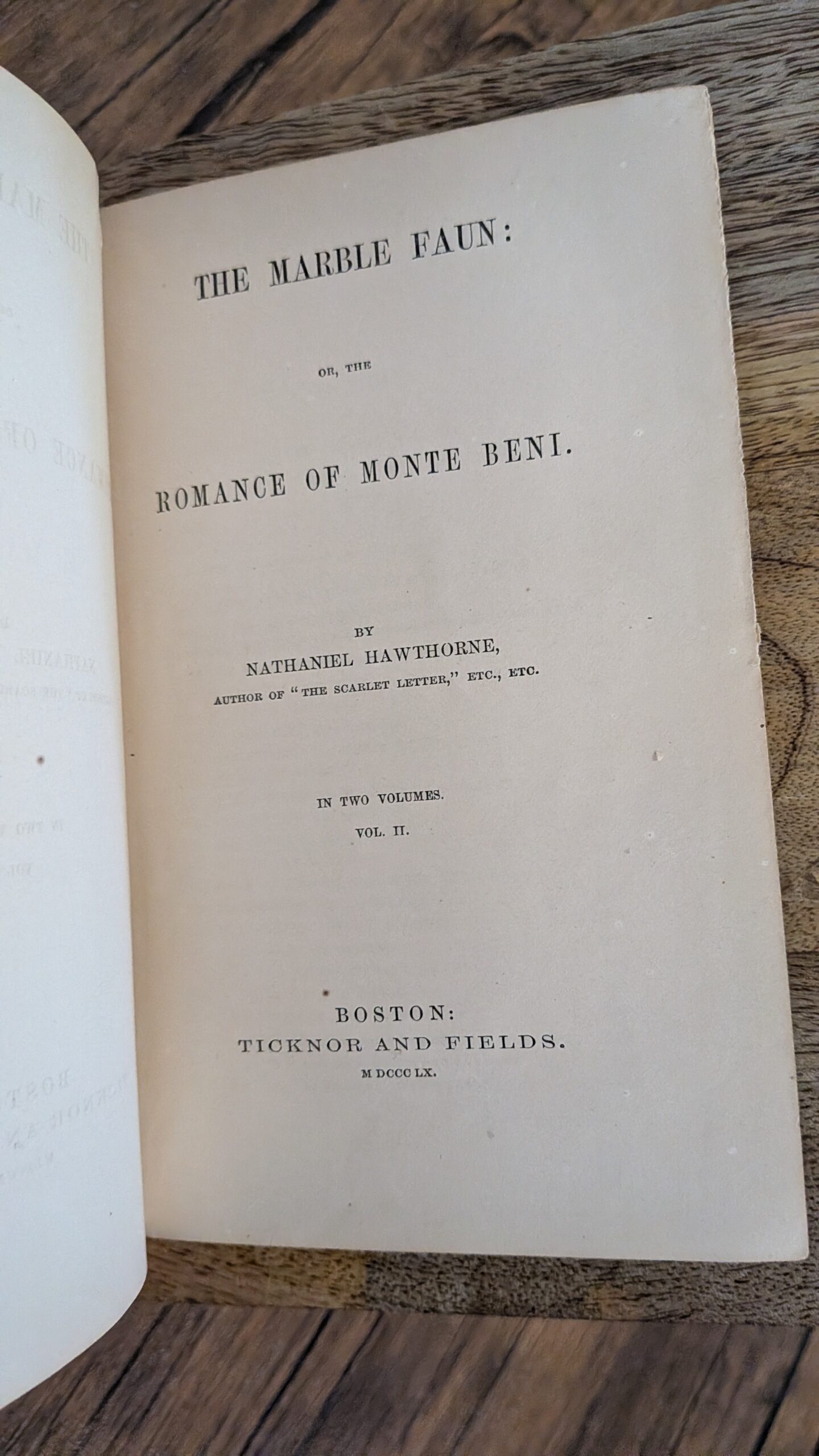
HAWTHORNE, Nathaniel. The Marble Faun: or, The Romance of Monte Beni. Boston: Ticknor and Fields, 1860.
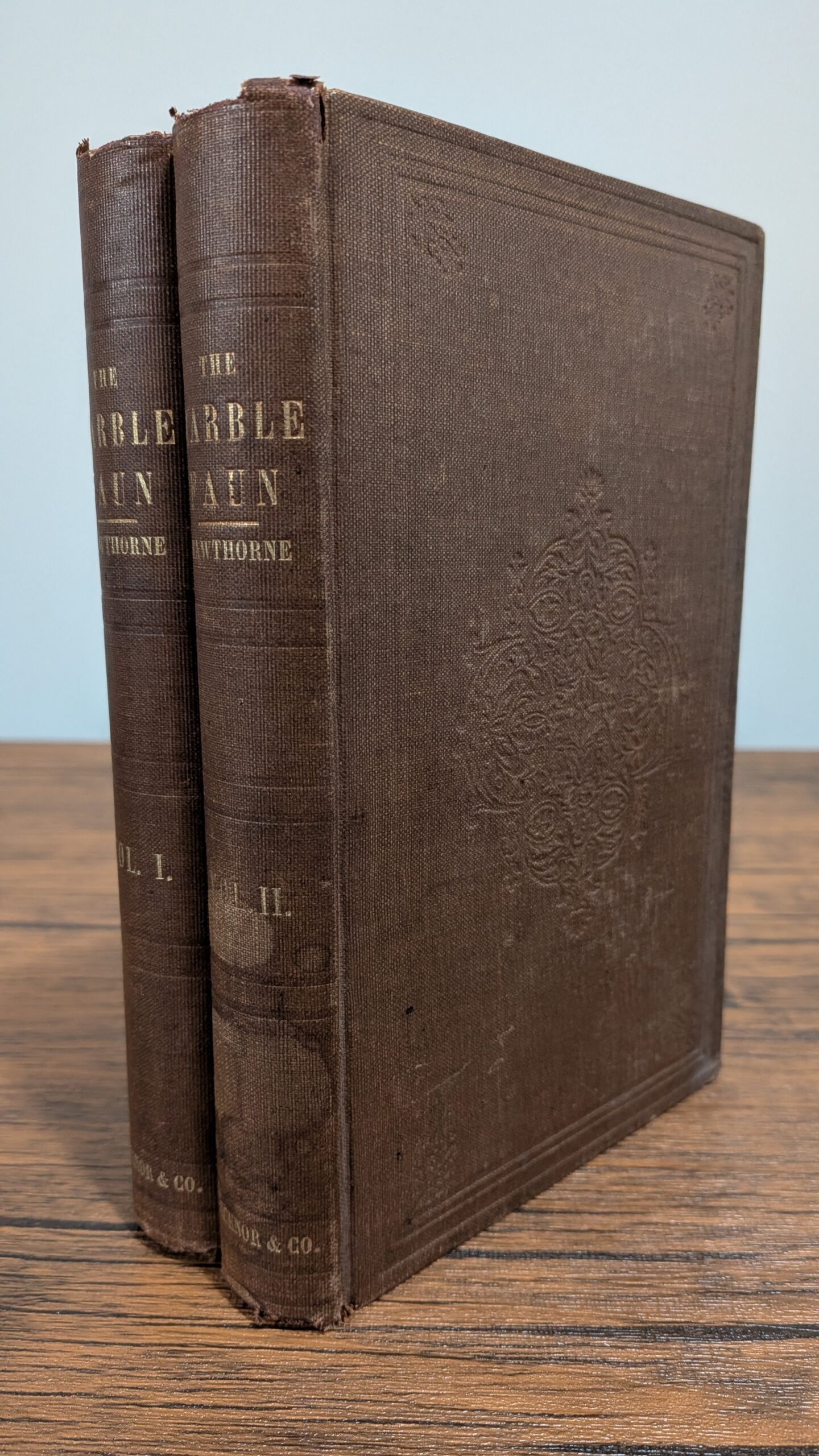
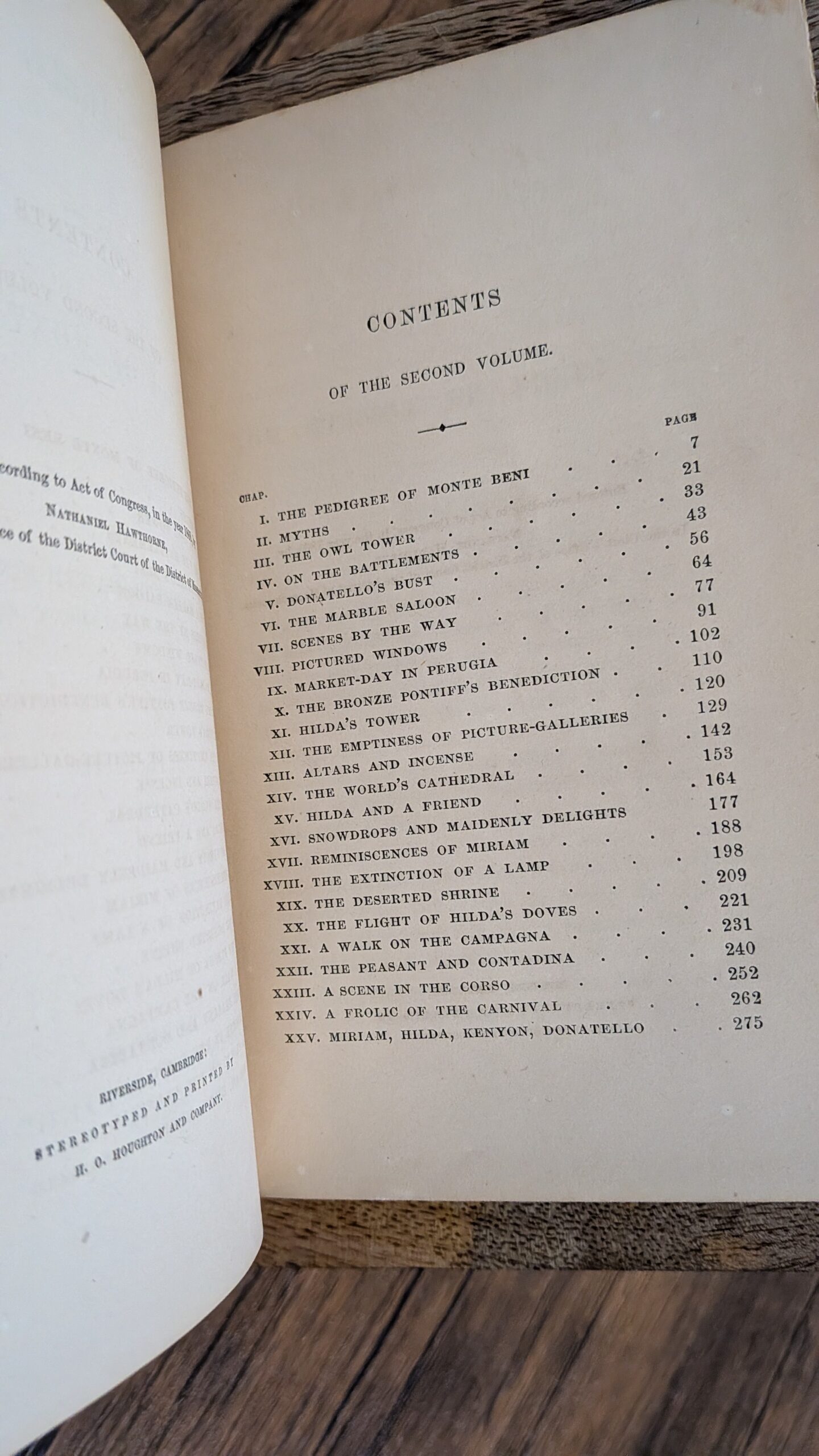
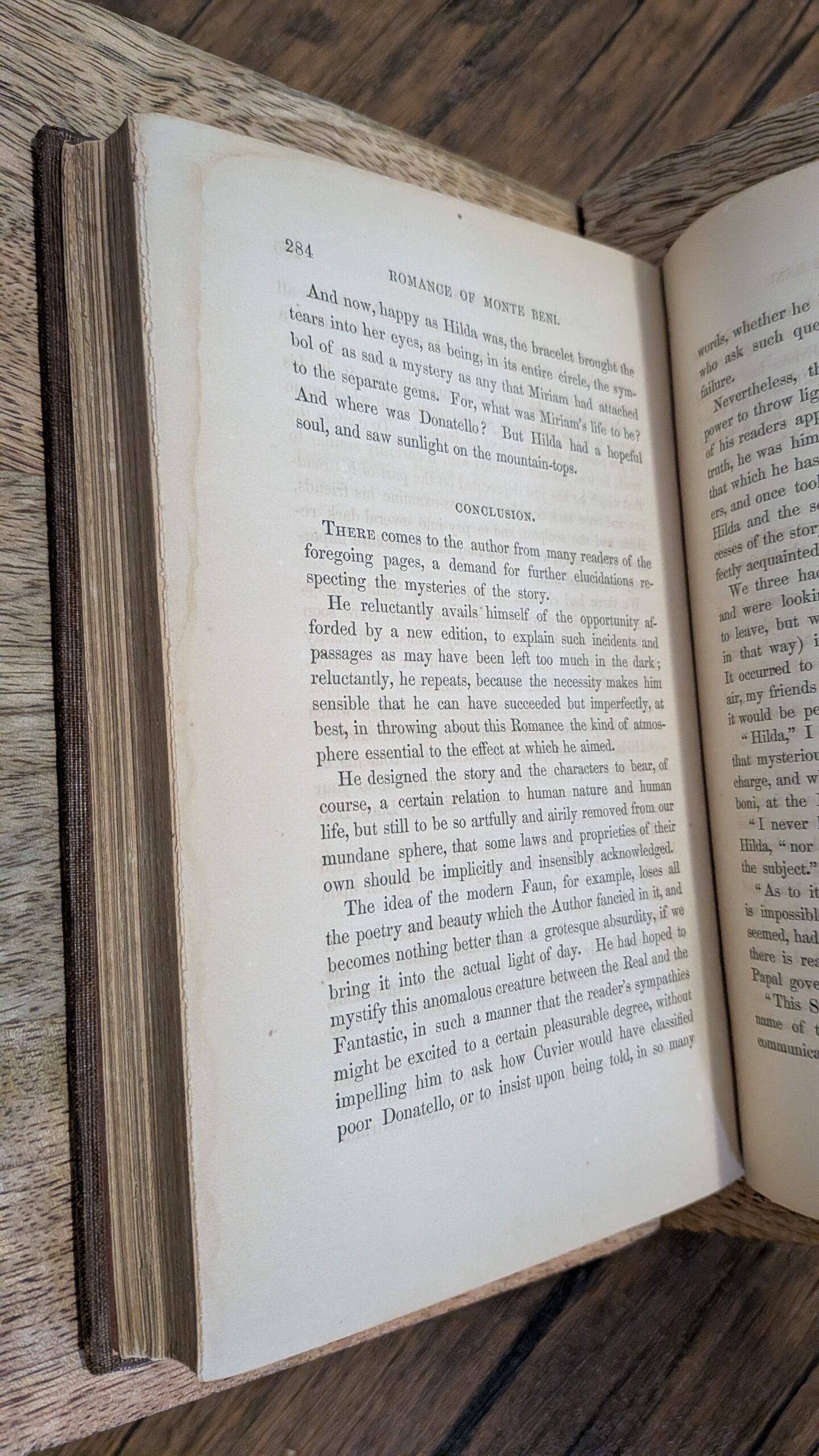
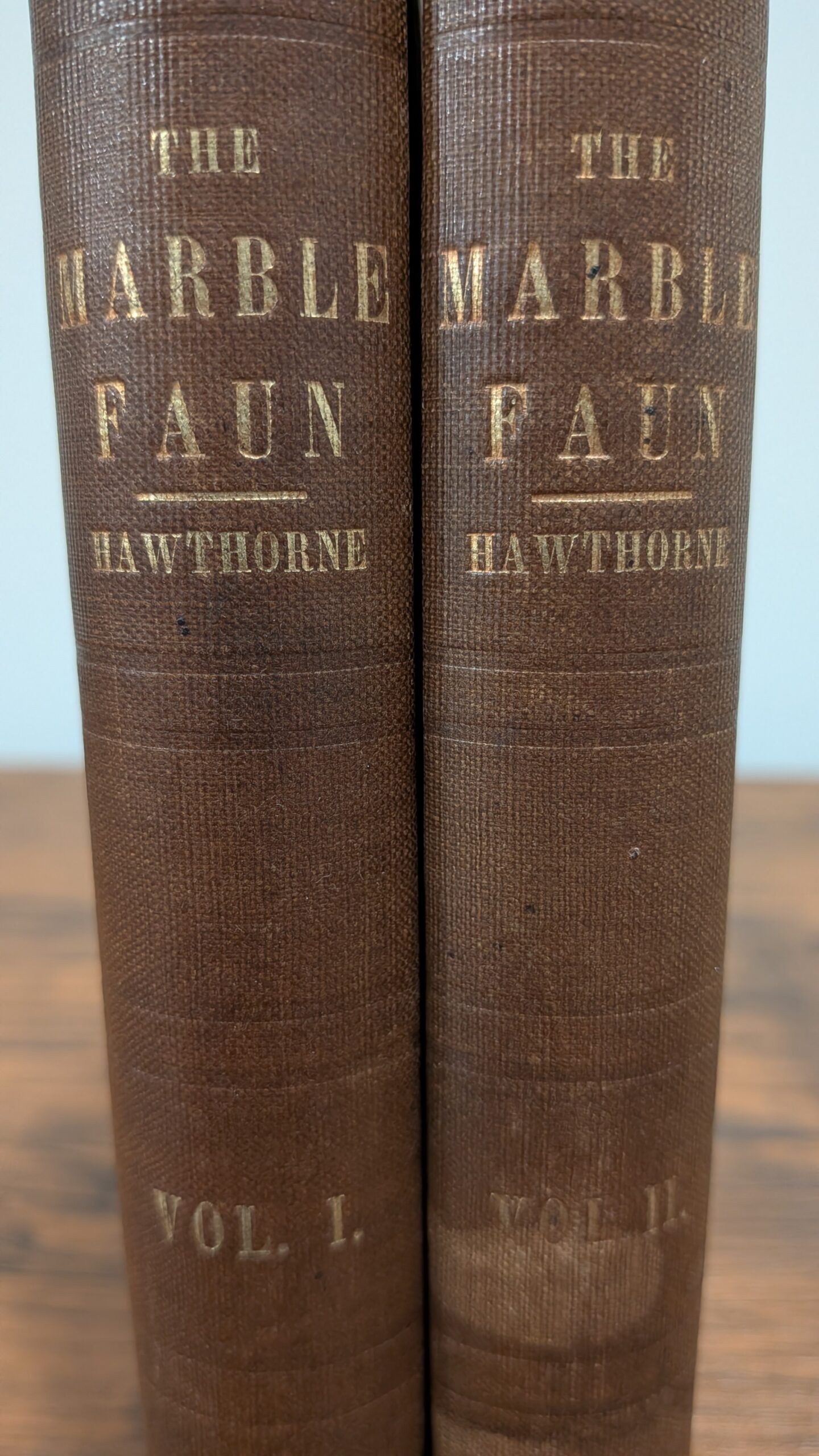
First American Edition, Early Later Printing. 2 vols. 12mo. 19 cm tall. 283 pages; 288 pages. Publisher’s full brown cloth, boards stamped in blind, gilt lettering to spine. Volume I conforming to Clark’s plate form C and without the publisher’s advertisements (only “most copies” had them inserted, per Clark). Volume II conforming to Clark’s plate form D. This manifestation consistent with the elusive fourth printing (see Bruccoli, pp. 46–47; Bowers, pp. l–li), the earliest post-publication printing, and the earliest printing that could have included the additional Conclusion. Clark A 23.3. Bowers, “Textual Introduction,” The Marble Faun, The Centenary Edition of the Works of Nathaniel Hawthorne (1968). Bruccoli, “Concealed Printings in Hawthorne,” Papers of the Bibliographical Society of America (1963). Very Good-. No previous owner markings or bookplates. Matching trace pencil markings and attempted erasures on the front pastedown and first blank prelim of each volume, suggesting an original set. Moderate staining to cloth. Moderate wear to spine ends. Moderate loss to upper margin of rear blank of volume I. Small partially closed tear to outer margin of half-title leaf of volume II that does not impact printed text. Mild dampstaining to rear of text block of volume II that does not impact printed text.
- Nathaniel Hawthorne’s “international novel,” his only European romance (which became a popular informal guidebook for American tourists in Italy), and an early example of American fiction exploring the encounters between Old World and New World cultures (a tradition continued by the likes of Henry James and Edith Wharton).
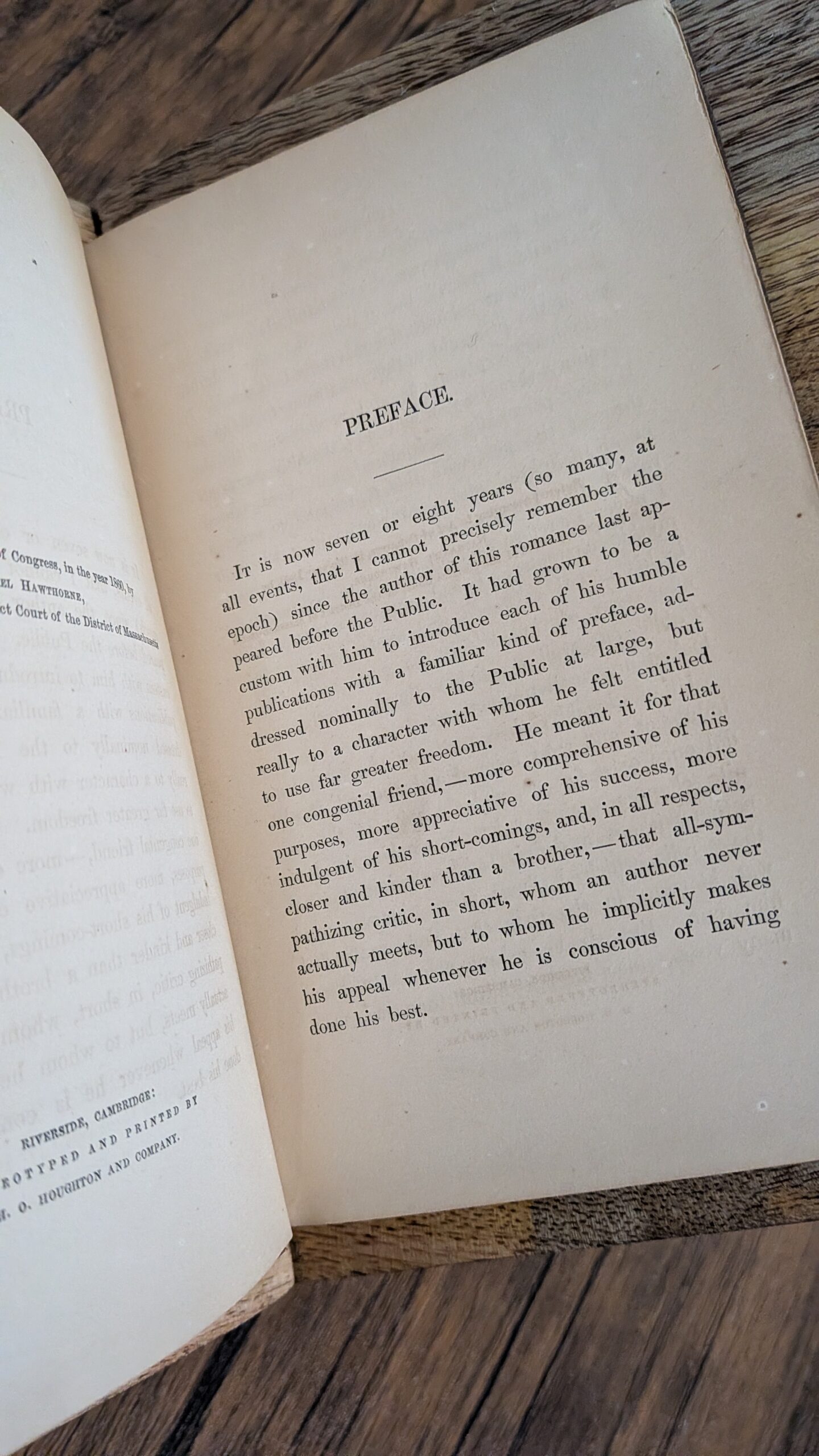
- Arguably the most bibliographically complex of Hawthorne’s four major romances, not least because of the addition of a new Conclusion that Hawthorne wrote after the initial release left readers perplexed by its inconclusive ending.
- This copy consistent with the earliest printing of the final narrative form (i.e., with the additional Conclusion) of this title, which was Hawthorne’s last completed work of fiction.